Summary:
Starting a pest control business takes proper licensing, a clear service niche, and a system that keeps jobs organized from first inspection to final payment. New owners should expect a 15 to 25 percent profit margin, with recurring plans and tight routing driving the strongest unit economics. A connected platform like Knockio replaces scattered tools by tracking job status, estimates, scheduling, and payments in one place. Companies that document everything, stay audit ready, and focus on referrals build a trusted local brand that scales steadily.
Summarize with:
Pests cause real damage to health, property, and reputation, and that’s exactly why pest control keeps growing into a business people trust with real money. Cities keep expanding, homeowners care more about hygiene than they used to, and commercial buildings need pest compliance just to stay open. Industry forecasts put the global pest control market past $30 billion by 2030. That kind of demand gives a new operator real room to build something that holds up even when the broader economy doesn’t.
Whether you’re a licensed technician ready to run your own crew or a first time entrepreneur looking for a business that doesn’t depend on trends, learning how to start a pest control business is a solid move. You don’t need a massive war chest to begin. You need the right license, a clear plan, and a system that keeps your jobs, your team, and your money organized from day one.
Understanding the Pest Control Industry Landscape
Before you spend a dollar on equipment or a license exam, it helps to understand how the industry actually works. That understanding shapes which services you offer, who you sell to, and how you price.
Key Pest Control Services in Demand
Not every pest control service gets called for at the same rate. Some pay better. Some are seasonal. Some require extra licensing but reward you with steadier income once you have it.
- Residential pest control: Ants, roaches, bed bugs, and rodents are constant problems for homeowners, which makes this the volume play for most new companies.
- Commercial pest control: Restaurants, offices, and warehouses need pest management to stay compliant and keep inspections clean. Contracts here tend to run longer.
- Termite work: Many states require special licensing for this, but termite jobs pay well and often turn into annual inspection contracts.
- Bed bug control: Heat treatments and residual treatments both require a clear protocol and a real follow up plan, since one missed step can mean a callback.
- Mosquito control: This service spikes hard in warm months, so it works well as a recurring monthly plan rather than a one time job.
- Wildlife exclusion: Sealing entry points, setting traps, and giving sanitation advice. It pairs naturally with rodent control and tends to carry better margins because fewer companies do it well.
- Eco friendly and organic pest solutions: More homeowners want treatments that are safe around kids and pets, and this niche keeps growing as awareness grows with it.
Common Challenges Faced by Pest Control Startups
Every new pest control company runs into the same handful of obstacles early on. None of them are fatal if you plan for them.
- Getting through licensing requirements before you can legally work.
- Staying current on chemical safety and environmental regulations.
- Competing for visibility against companies that have been around for years.
- Managing seasonal swings in demand without a recurring revenue base to fall back on.
Companies that plan around these challenges from the start, instead of reacting to them later, build a stronger brand faster than the competition.
Creating a Business Plan for Your Pest Control Company
A real business plan is what turns “I want to start a pest control company” into a working business. It gives you a roadmap: where you’re headed, how you’ll get there, and what you’ll need along the way.
Setting Business Goals and Objectives
Clear goals keep you focused when the early months get chaotic. Start with small, realistic targets, then build toward where you want the business to be in a few years.
A few examples worth borrowing:
- Serve 50 residential clients in your first 6 months.
- Reach $100,000 in revenue by the end of year one.
Identifying Your Target Market and Service Niche
Different customers need different things. A busy homeowner wants speed. A restaurant manager wants documentation. A property manager wants predictable, recurring service. Knowing who you’re serving shapes everything from your pricing to your marketing.
You’ll generally choose between:
- Residential clients: Higher volume, lower ticket value per job.
- Commercial clients: Fewer accounts, but bigger contracts and more consistent revenue.
- Eco friendly solutions: A premium niche with strong, growing demand.
Legal Requirements and Licensing for Pest Control Businesses
You’re handling chemicals and sometimes wildlife, so the legal side isn’t optional. Getting licensed properly protects you and tells your clients you’re a professional, not a side hustle with a spray bottle.
Getting Certified and Licensed
Every U.S. state requires a commercial pesticide applicator’s license for pest control operators, typically issued through the state’s Department of Agriculture or Environmental Protection office. The exam usually covers pest identification, safe pesticide handling, and environmental impact.
Understanding Health and Safety Regulations
Chemicals, traps, and wildlife mean safety has to come first, every time. Your team should follow OSHA standards and EPA rules for handling chemicals. Keep clean records and use proper protective gear. It keeps your people safe and shows clients you take the work seriously.
Choosing a Business Structure and Registering Your Company
Your business structure affects your taxes, your liability, and how you run day to day operations, so it’s worth getting right early.
- Sole Proprietorship: Easiest to set up, but you’re personally on the hook for business debts.
- LLC: Protects your personal assets while staying relatively simple to manage.
- Corporation: More paperwork, but stronger liability protection and easier access to funding down the line.
Once you’ve picked a structure, register your business name, apply for an EIN, and pull any local permits you need to operate legally.
Building Your Pest Control Brand Identity
Your brand is what people remember after the truck pulls away. It’s built from your name, your logo, your message, and how consistent all of it feels.
Designing an Effective Logo and Brand Message
A clean logo signals professionalism before a customer ever talks to you. Your message should make it obvious what you stand for. Keep the design simple, and consider a tagline that gives people a quick read on your business, something like “Protecting Homes, One Pest at a Time.”
Building a Professional Website and Online Presence
Most people searching for pest control start online, so your website needs to do real work for you. It should let visitors see your services, check pricing, and contact you without friction. Beyond the website, an active presence on review sites and social media builds trust before the first phone call.
Your site should include:
- Service pages and pricing: Make it easy to see what you offer and what it costs.
- Customer reviews: Real testimonials build trust faster than any ad copy.
- Google Business Profile: This is how local customers find you when they search.
For a closer look at industry standards, PestWorld.org, the National Pest Management Association’s official site, is a useful reference point.
Purchasing Equipment, Chemicals, and Supplies
Good equipment is what separates a professional job from a sloppy one, and your customers notice the difference even if they can’t name it.
You’ll want to have on hand:
- Sprayers, applicators, and sealants for accurate treatment placement.
- Traps, glue boards, and bait stations for rodent and insect control.
- Protective gear, including gloves, masks, and safety clothing.
- Approved chemicals and pesticides matched to the pests you’re treating.
- Inspection tools like flashlights, ladders, and moisture meters to spot activity.
- Cleanup supplies so you leave every job site looking professional.
Showing up properly equipped, even on your first week of business, makes your company look established from day one.
Hiring and Training Your Team
Your team is what keeps the business running once you can’t be on every job yourself. Hiring well and training thoroughly protects your reputation and keeps customers coming back.
- Hire the right people: Look for technicians who are reliable, detail oriented, and comfortable around both customers and chemicals. Recent U.S. labor data puts median pest control technician pay in the mid $40,000 range annually. Adjust that for your local market and competition.
- Train thoroughly: Cover equipment use, pest identification, and customer service, not just the technical work.
- Set clear procedures: Standardize your SOPs for inspections, treatments, and follow ups so quality doesn’t depend on which technician shows up.
- Document everything: If it isn’t written down, it didn’t happen, and that matters for both training and liability.
- Keep learning: Pest control techniques and products evolve, so build ongoing training into your operations.
- Lead by example: The professionalism and safety standards you model become the standard your team follows.
Marketing Strategies to Grow Your Pest Control Business
Being great at pest control doesn’t matter if nobody knows your business exists. Smart marketing puts you in front of the right people consistently.
- Build a professional website: Make your services, pricing, and contact information easy to find.
- Optimize for local search: Claim your Google Business Profile and ask satisfied customers for reviews.
- Use social media: Share before and after photos, quick tips, and real customer stories.
- Offer promotions and referral programs: Seasonal deals and referral bonuses are reliable ways to bring in new business.
- Network locally: Property managers, real estate agents, and local businesses are strong referral sources.
- Advertise strategically: Targeted online ads, local print, and community boards all still work when used well.
Setting Prices and Managing Finances
Running a pest control company means treating pests and running a profitable business at the same time. Smart pricing and tight financial tracking are what keep the lights on.
- Research the local competition: Check what other companies in your area charge and price your work to reflect your expertise.
- Account for every cost: Equipment, chemicals, labor, insurance, and overhead all need to be in your pricing math. Most pest control companies run around a 15 to 25 percent profit margin depending on services and territory. A simple break even calculation tells you how many clients you need monthly to stay profitable.
- Offer flexible service packages: Monthly, quarterly, and yearly plans create steady, predictable income.
- Provide options for every budget: A range from basic to premium plans widens who you can sell to.
- Stay organized: Track expenses, invoices, and payments with reliable software, keep a dedicated business bank account, and bring in a CPA for tax planning.
- Track expenses carefully: A detailed record shows you exactly where money is going and where you can cut.
- Monitor cash flow: Make sure incoming revenue covers payroll, bills, and the unexpected.
- Plan for growth: Set aside funds for marketing, training, and equipment upgrades so expansion doesn’t strain the business.
Running Your Pest Control Business as One Connected System
A lot of new pest control owners start out juggling a spreadsheet for jobs, a separate app for invoicing, a paper calendar for routes, and a group chat for the crew. It works for the first few customers. It falls apart once you’re managing twenty jobs a week across multiple technicians.
This is where most companies start looking for software, and the right system does more than store contact information. It should follow a job from the first inspection all the way through payment.
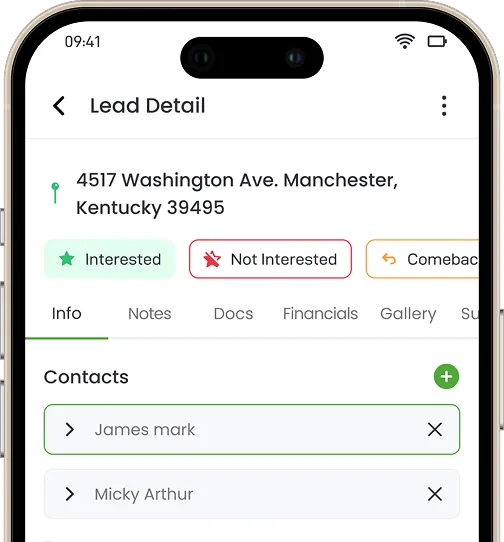
Here’s what that looks like with Knockio. Once a job is created, it holds the customer’s information, the property address, notes from the inspection, photos from the technician, the chemicals used, the appointment history, and the invoice, all in one record instead of scattered across four tools. Dynamic job statuses let you build your own pipeline, so a job can move from “Inspection Scheduled” to “Treatment In Progress” to “Follow Up Due” using whatever names fit how your company actually works.
Map view shows your team where every job sits geographically, which matters a lot when you’re trying to keep routes tight and drive time low. Board view gives your office staff a clear picture of where every job stands in the pipeline, so nothing slips through during a busy week. List view gives you the detail when you need to dig into a specific account.
On the financial side, estimates can include optional line items, digital signatures, and customer acceptance, so a technician can quote a termite job on site and get it signed before they leave the property. Once work is approved, it can move into a work order with tasks, schedules, and crew notes attached, and payment can be collected through text to pay, tap to pay, credit card, or ACH, or entered manually if a customer pays by check. Recurring mosquito or quarterly pest plans can be set up once and then tracked automatically as jobs come due.
The Automation Flow Builder handles the repetitive follow up that’s easy to forget when you’re busy: payment reminders, appointment confirmations, and seasonal check in texts can all run without someone in the office manually sending them.
None of this replaces good technicians or good service. It just means the information about every job lives in one place instead of five different tools that don’t talk to each other.
Building Long-Term Customer Relationships
Customers who come back, refer friends, and leave reviews are worth far more than any single job. Building that kind of loyalty doesn’t take much, but it does take consistency.
- Follow up after every visit: Confirm the treatment worked and answer any lingering questions.
- Send seasonal reminders: Tips on stopping mosquitoes in summer or blocking rodents before winter keep you top of mind.
- Offer small perks: Loyalty discounts and referral rewards show appreciation without cutting deep into margin.
- Stay genuinely helpful: Prevention checklists and simple advice build trust beyond the service call.
- Show up professionally: Arrive on time, wear a clean uniform, explain the plan, and leave the space neat.
- Earn reviews honestly: Happy customers bring in new business at a lower cost than almost any ad campaign.
Scaling Your Pest Control Business for Growth
Once the core business runs smoothly, growth becomes the next real decision. A few practical paths:
- Expand carefully: Add nearby suburbs only if your routes stay tight. Long drives quietly eat your profit.
- Add in demand services: Bed bug heat treatments or termite inspections make sense once your team is trained and equipped.
- Build a small commercial division: Restaurants, property managers, and warehouses respond well to strong documentation and clear communication.
- Consider small acquisitions: Buying a nearby competitor can accelerate growth if you have the cash and a real integration plan.
- Protect the fundamentals: Documentation, efficient routing, recurring plans, and a well trained team are what let growth actually stick.
Common Mistakes to Avoid When Starting a Pest Control Business
A few missteps show up again and again in new pest control companies, and most are avoidable with a little foresight.
- Starting before licensing is approved: Working without proper licensing risks fines and damages trust before you’ve even built any.
- Underpricing your services: A cheap job that requires a long drive and thin margin hurts your cash flow more than it helps your client count.
- Ignoring safety standards: Label instructions and protective gear exist for a reason, every time, not just on inspection days.
- Neglecting marketing: Great service means nothing if potential customers never hear about it.
- Poor bookkeeping: Without a clear financial record, tax season and cash flow problems show up at the worst possible time.
Twelve Week Launch Plan
Weeks 1 and 2: Get Legal and Set Up Services
Pick 3 to 4 core services and write a one page process for each. Register for your state exams and gather study guides. Set up your business entity, insurance, and bank account. Buy essential gear and organize your safety binder.
Weeks 3 and 4: Branding and Online Presence
Finalize your business name and logo. Order uniforms and add vehicle lettering. Build a simple website with a home page, service pages, and locations. Add a clear “Book an Inspection” button. Set up your Google Business Profile and collect your first two or three reviews.
Weeks 5 and 6: Software and Territory Setup
Set up a platform like Knockio to handle your jobs, scheduling, and customer records before you’re too busy to do it properly. Plan your service areas and routes. Build estimate templates with digital signatures linked to your calendar. Set clear pricing tiers and add ons to keep quoting simple.
Weeks 7 and 8: Job Generation
Spread the word in 2 to 3 nearby ZIP codes. Run a small search ad campaign to build local visibility. Leave door hangers and ask happy customers to refer friends and family.
Weeks 9 and 10: Service Delivery and Documentation
Do every job carefully, with clean notes and photos attached to the record. Track drive time, chemical use, and any callbacks. Ask satisfied customers for reviews and permission to use their photos.
Weeks 11 and 12: Optimize and Grow
Adjust routes, appointment windows, and pricing based on what the first ten weeks taught you. Introduce a seasonal offer, like a mosquito plan, heading into the next quarter. Publish a few helpful articles that link back to your service pages.
Residential and Commercial Playbooks
Residential Clients
Be quick, friendly, and clear. Speed and easy communication matter more here than almost anything else. Leave a prevention checklist behind, since small tips leave a lasting impression. Book the next visit before you leave so the customer already knows what’s coming.
Commercial Clients
Stay professional, predictable, and thorough with documentation. Bring proof: reports, station maps, and training records build credibility fast. Use your software to standardize reports and chemical logs instead of relying on memory. Stay audit ready for sensitive sites like restaurants, with a clean record and clear response times.
Risk Management and Quality Control
Safety isn’t optional in this industry. It’s what protects your team, your customers, and your business from fines and accidents.
- Follow the label: Stick to recommended application methods, doses, and re entry times every time.
- Calibrate equipment: Check sprayers regularly to make sure they’re performing accurately.
- Store products safely: Keep chemicals secured and log every use.
- Track callbacks as data: A recurring pest complaint usually points to a training gap or a procedure that needs updating.
- Prepare for emergencies: Keep a spill kit in every vehicle and emergency contacts saved in your app.
- Learn from incidents: Bring problems up in weekly meetings so the whole team improves, not just the technician involved.
Financial Targets and Unit Economics
A handful of numbers tell you most of what you need to know about your business’s health.
- Recurring revenue: Grow the share of income coming from monthly or yearly plans.
- Material costs: Track what each service actually costs you in product.
- Travel efficiency: Measure daily drive time against working time, then adjust routes for better margin.
- Callbacks: Track callbacks per 100 jobs and work to lower that number through better inspections and training.
- Margins: Raise prices for far zones, drop accounts that require long drives, and keep tightening your routes.
- Cash flow: Annual prepay discounts can keep money coming in more predictably.
- Dashboards: Simple, visible numbers in one place help you catch problems early instead of finding out at tax time.
Conclusion: Turning Your Pest Control Startup Into a Thriving Enterprise
Succeeding in pest control comes down to a working system and a few smart habits applied consistently.
Start simple. Pick a few core services, get properly licensed, buy the right gear, and write clear procedures. Use one connected system for documentation, sales, routing, and scheduling so nothing falls through the cracks. Focus on recurring plans and tighter routes to fit more stops into less time. Keep an eye on costs, callbacks, and travel so problems get caught early. Communicate clearly with customers and leave them with something useful after every visit.
When you’re ready to grow, expand carefully, keep your routes efficient, and keep your records clean. Steady demand, a system that actually works, and customers who trust you are what turn a new pest control company into a brand that keeps growing year after year.
Ready to run your jobs, scheduling, and payments from one place? see how Knockio’s pest control software connects your sales and service teams from the first inspection to the final invoice.
1. How much will it cost me to start a pest control business?
You will need to spend between $10,000 and $50,000. That includes licensing, equipment, and marketing. You can start small and grow as your business picks up.
2. Do I need a license to start?
Yes, you’ll need to pass exams on pesticide safety and regulations.
3. Is pest control actually profitable?
Definitely! Most pest control businesses earn around 15–25% in profit. If you want a consistent income, keep your eyes on recurring contracts; they keep your income consistent.
4. How do I get my first customer?
You should start looking in your community. You can claim your Google Business profile, ask friends or family for referrals, run a small ad, or leave door hangers. You can also try offering a first-time discount to help build trust and get those early reviews.
5. What’s the best software to manage my business?
You should look into tools like Knockio, Jobber, PestPac, and Housecall Pro to make life easier.

Waqar Hussain leads SEO and digital media at Knockio, a field sales and field service management (FSM) platform for businesses managing sales reps, field teams, jobs, and customer appointments. He focuses on content strategy, search growth, and digital media to help more teams discover better ways to manage leads, jobs, and field operations.