Summary:
Sales rep tracking software gives field teams real time visibility into routes, visits, and follow-ups, cutting wasted drive time and missed leads. Managers get live location data and performance insights, while reps spend less time on paperwork and more time selling. Knockio extends this further by connecting the sales stage to production, turning a signed prospect into a full job with estimates, work orders, invoices, and payments in one system. The result is fewer dropped handoffs and a clearer picture of every job from first knock to final payment.
Summarize with:
Field sales rarely stays neat. Reps move between appointments, knock on doors, and chase down homeowners who said “maybe later” three weeks ago. If you run a solar, roofing, window cleaning, fiber, pest control, or home improvement team, keeping track of a roaming sales force is a daily job in itself. You want reps selling, not stuck untangling paperwork or guessing what happened on yesterday’s route.
This is where sales rep tracking software earns its keep. Companies that adopt mobile tracking tools have reported an 87% improvement in sales performance, and the reasons behind that jump are practical, not magical. This guide breaks down exactly how tracking software tightens up field sales, with real scenarios from the industries that rely on it most.
Why Field Sales Efficiency Needs to Improve
Picture a solar rep named Sara. She spends half her afternoon driving between two appointments on opposite sides of town because nobody planned her route. Or picture Mike, a medical device rep, who forgets to follow up with a clinic because he’s juggling forty other prospects in his head. Neither of them is bad at their job. They just don’t have a system built for how field sales actually works.
These small breakdowns add up fast. Inefficient routes, unplanned gaps in the day, and no real-time coordination between reps and managers quietly drain revenue. Owners feel it later, in missed follow-ups and prospects who went with a competitor because nobody called them back in time.
Sales rep tracking software goes straight at these problems. It gives reps and managers one shared view of the day: where reps should go next, what happened at each stop, and what needs to happen tomorrow. Instead of running the sales team on memory and paper notes, everything gets logged as it happens. Reps get more selling hours back, and owners finally get a clear picture of what their field team is actually doing between 8 a.m. and 5 p.m.
Boosting Sales Team Productivity on the Go
Reps only get so many hours in a day, and every minute spent filling out reports is a minute not spent knocking. Tracking software cuts that admin time down by logging visits, calls, and notes automatically from a rep’s phone.
Industry research backs this up. Field sales tools that automate routine logging free reps to spend more of their day on actual conversations instead of paperwork, according to a breakdown of top field sales management platforms. A roofing rep who used to spend twenty minutes at the end of the day typing up notes can now knock two more doors instead.
Take a fiber internet sales team canvassing a new neighborhood. Each rep logs outcomes right on their phone: interested, not home, follow up next week. No end-of-day scramble to remember who said what. Some tools even show live progress, like how many homeowners a rep has talked to that day, which works like a quiet nudge to keep moving. The math is simple. Fewer minutes lost to admin means more doors knocked, and more doors knocked means more jobs on the books.
Improving Field Sales Management and Accountability
Managing a field team without visibility is a guessing game. Did reps hit every house on their assigned street? Are they stuck in traffic, or did they just stop working an hour ago? Without a tracking system, a manager finds out days later, if at all.
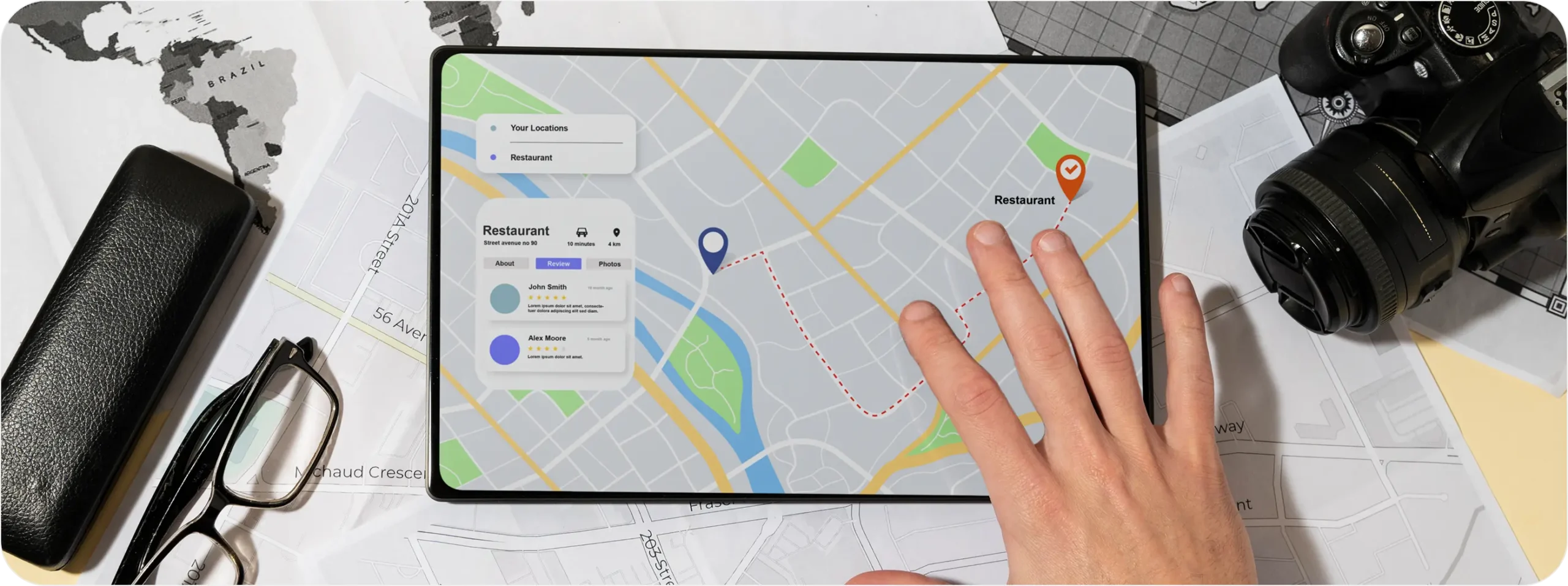
Modern tracking software solves this with GPS and live mapping. A manager can pull up a map and see exactly where each rep is right now, and where they’ve already been. For a team running roofing sales software after a storm, that means a manager can confirm in seconds that reps are actually covering the neighborhoods they were assigned, instead of guessing.
This kind of visibility isn’t about watching over someone’s shoulder. It’s about giving outside sales teams the same structure that inside teams get for free just by working in an office. When a rep’s location hasn’t changed in a while, a manager can check in before a small delay turns into a wasted afternoon. In medical sales, where appointment windows with doctors are tight, that same visibility means a manager can step in the moment something looks off track.
Accountability runs both directions here. Reps who know their stops are logged tend to make every stop count. Managers stop relying on trust alone and start working from what’s actually happening in the field, in real time.
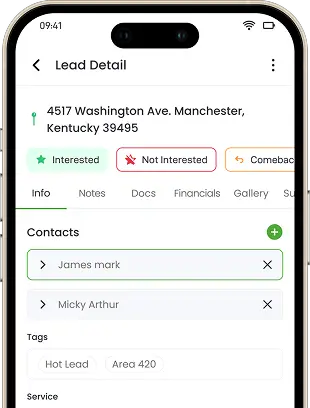
With Knockio, that same visibility carries straight into what happens after the visit. Managers get map based team views, live rep activity, assigned territories, and job statuses that show exactly where each prospect stands. A canvassed homeowner who says yes doesn’t just disappear into a notebook. That job carries its full history forward, from the first knock to the signed estimate, so nothing gets lost in the handoff between sales and the office.
Streamlining Routes and Reducing Downtime
Bad routing is one of the quietest ways field sales teams lose money. A rep who zigzags across town instead of working a tight loop burns gas, burns time, and has less energy left for the doors that actually matter. Route optimization built into tracking software fixes this by mapping the smartest sequence of stops based on distance, traffic, and scheduled appointments.
The impact is bigger than most owners expect. A solar rep who unknowingly books two appointments on opposite ends of the city loses most of the day to driving instead of selling. Smart routing catches that kind of scheduling mistake and clusters visits by area instead. Some platforms claim routing improvements can help reps reach up to 30% more prospects in the same working hours, simply by cutting the drive time between stops.
Good routing also fills the dead space in a rep’s day. If an appointment ends early or gets canceled, the software can suggest a nearby prospect worth a quick visit instead of leaving the rep idle. A window cleaning rep who wraps up a quote fifteen minutes early might get a nudge toward another interested homeowner just a few blocks away. Less time behind the wheel means more time in front of the people who might actually buy.
Optimizing Sales Rep Performance with Data Insights
Field sales used to run on gut feel. How many visits did a rep make this week? Which areas convert best? Which reps close more often, and why? Tracking software turns those questions into answers pulled from actual data instead of guesswork.
Say a manager at a medical supply company notices Rep A logs 15 visits a week with a 20% close rate, while Rep B logs only 10 visits but closes 30% of the time. That gap tells a story. Maybe Rep B spends more time per visit and qualifies prospects better. Maybe certain territories just convert easier. Either way, the manager now has something real to work with instead of a hunch.
This data works both ways. Reps can see their own numbers too, which tends to spark a little healthy competition around who’s closing the most this week. When performance is visible instead of buried in a spreadsheet nobody checks, teams naturally start adjusting in real time rather than waiting for a quarterly review that’s already too late to matter.
Improving Follow-Ups and Customer Relationships
Most sales don’t close on the first conversation. What happens after that first knock or first estimate is often what decides the deal. Tracking software makes sure nothing slips through the cracks by logging every interaction and scheduling the next step automatically.
A rep finishes a visit, taps a quick outcome into the app (interested, follow up in a week, not home), and the system takes it from there. No relying on memory. No sticky notes lost in a truck console. This matters even more in industries like medical sales, where a rep might need to circle back to a clinic a month later, once the doctor has had time to review a proposal.
Automated reminders and integrated messaging push this further. A window cleaning rep can trigger a thank you message or a quote right after a site visit, then a follow up call reminder two days later without lifting a finger. Consistent follow-up is one of the biggest levers in sales, and it’s also the easiest thing to lose track of without a system behind it.
In Knockio, this is where a prospect stops being just a name on a list. Once someone says yes, that job carries every note, photo, appointment, and file forward automatically. The office isn’t starting from scratch when it’s time to send an estimate or schedule a crew. Knockio’s Automation Flow Builder can also handle the routine follow-up work in the background, like sending reminder texts or scheduling the next check-in, so reps stay focused on the next conversation instead of chasing their own paperwork.
Enabling Better Coaching and Training for Reps
Good managers coach. Great managers coach with real numbers instead of vague pep talks. Tracking software gives managers the specifics that turn “you need to hustle more” into something a rep can actually act on, like “you only made three visits Tuesday and there’s a two hour gap in your afternoon.”
Route histories and check-in logs reveal patterns a manager would otherwise miss. Maybe a rep is spending too long with prospects who were never going to buy, while stronger leads sit untouched. That kind of pattern is invisible without data, but obvious once you can see it.
The same data helps spread what’s working. If one medical device sales rep consistently converts hospital leads at a higher rate, a manager can look at their activity log and find out why. Maybe they follow up within 24 hours every time. That single habit, once identified, becomes a coaching point for the whole team instead of a secret one rep happens to know.
Real-World Examples Across Industries
Solar Sales: Reps go door to door across residential neighborhoods. With territory mapping, each rep works a distinct zone with no overlap, and the app tracks which homes were contacted and which showed interest. No house gets skipped, and none get knocked twice. Interested homeowners get timely follow-ups instead of falling off the list.
Roofing Sales: After a storm, roofing reps canvass entire neighborhoods offering inspections. Managers can see in real time which streets are already covered, so two reps don’t knock the same door by accident. Photos and notes captured on-site (like “full roof replacement needed, send a quote”) flow straight back to the office, so estimates go out fast instead of waiting for someone to remember the details later.
Window Cleaning Services: On-site estimates are the bread and butter here. Route optimization keeps reps moving efficiently between stops, and if an appointment wraps early, the app can point them toward a nearby prospect instead of wasting the gap. Quotes logged in the field can turn into formal proposals sent out the same day, which means faster conversion from estimate to booked job.
Fiber-Optic Internet Sales: Speed and coverage decide who wins a new territory. Reps need to hit every home in a rollout area before a competitor does. Tracking software keeps blocks systematically covered and flags which homes said not interested versus follow up later, so warm leads get revisited instead of forgotten. GPS logging also protects the company if a homeowner claims a rep never showed.
Medical and Pharmaceutical Sales: Complex schedules and strict facility protocols make this one of the harder verticals to manage manually. A combined tracking and CRM setup keeps appointment calendars organized, maps the best route for daily rounds, and logs every interaction. Managers can spot that accounts visited every two weeks generate steadier orders than accounts visited less often, then coach reps to adjust visit frequency accordingly.
Across every one of these industries, the pattern is the same. Tracking software brings order to a job that used to run on memory and momentum. And for the businesses that also handle production and payments, the value doesn’t stop at the door. Once a prospect says yes, sales teams that use real-time tracking convert that momentum into a smoother handoff to the office instead of losing it in translation.
With Knockio, that handoff is built in rather than bolted on. A sold job moves from appointment straight into a work order, complete with tasks, schedules, crew notes, and photos. Estimates can include templates, optional line items, digital signatures, and customer acceptance, so closing the paperwork takes minutes instead of days. Payments can be collected through text to pay, tap to pay, credit card, or ACH, or entered manually if the office prefers to track it that way. None of it lives in a separate tool. It’s all part of the same job record the sales rep started when they first knocked on the door.
Conclusion: Higher Efficiency, Higher Conversion Rates
Field sales efficiency isn’t about pushing reps to work harder. It’s about removing the friction that eats their day: bad routes, forgotten follow-ups, and no visibility into what’s actually happening between appointments. Sales rep tracking software fixes all three by automating the busywork, tightening up routes, and giving managers a clear, live view of the team.
The real value isn’t the GPS dot on a map. It’s what that data makes possible: knowing which leads need attention, which reps need coaching, and which parts of the day are being wasted. For a home service business, that means fewer opportunities lost to disorganization and more prospects actually making it to a signed job.
Most home service companies end up stitching together five or more separate tools to manage this: one for canvassing, one for scheduling, one for estimates, one for payments, one for production. Every handoff between those tools is a place where a job can stall or a detail can get lost.
Knockio replaces that patchwork with one connected system, from the first door knock to the final payment. Reps get territory coverage, routing, and live tracking. Managers get real-time visibility and job statuses that show exactly where every job stands. The office gets estimates, invoices, work orders, and payments tied to the same job record, without re-entering anything twice.
If your team is still running field sales on separate apps and spreadsheets, it might be worth seeing what one connected system looks like in practice.

Waqar Hussain leads SEO and digital media at Knockio, a field sales and field service management (FSM) platform for businesses managing sales reps, field teams, jobs, and customer appointments. He focuses on content strategy, search growth, and digital media to help more teams discover better ways to manage leads, jobs, and field operations.