Summary:
Starting an HVAC business takes more than trade skill. This guide walks through 12 steps in order, from picking your lane and getting EPA 608 plus state licensing, to researching your local market, writing a plan, registering an LLC, lining up insurance and a bond, and budgeting the van, tools, parts, and cash reserve that carry you through slow months. It covers pricing the right way by knowing your true cost per billable hour, using flat rate on residential work, and offering options on replacements. A sample business plan with example prices, startup costs, and three year projections is included, along with common mistakes and FAQs. The last piece is office systems: one job record with statuses, estimates, work orders, inventory, invoices, and payments so nothing gets lost between a call and a paid invoice.
Summarize with:
You can fix a failed compressor in the dark. You can braze a line set in a cramped attic in July. You know what a bad capacitor sounds like before you open the panel.
None of that tells you how to run a business.
That is the hard truth most techs learn in year one. The work is the easy part. The hard parts are pricing, getting paid, keeping parts on the van, and making sure no customer falls through the cracks when the phone rings nonstop in the first heat wave.
This guide is for the tech who wants to go out on their own, and for the owner who already did it and is still figuring things out. We will cover 12 steps in the order you should do them.
Let’s get into it.
The 12 Steps to Start an HVAC Business
| Step | What You Do | Why It Matters |
| 1 | Get field experience and pick your lane | You need skill and a clear focus |
| 2 | Get licensed and certified | You can’t legally work without it |
| 3 | Research your local market | Tells you what to charge and who to serve |
| 4 | Write your business plan | Forces you to face the numbers |
| 5 | Register your business | Protects you and makes you official |
| 6 | Get insured and bonded | One bad job can wipe you out without it |
| 7 | Figure out startup costs and funding | You need cash to survive slow months |
| 8 | Buy your van, tools, and starting inventory | No parts means no fix and no pay |
| 9 | Set your pricing | Bad pricing kills more shops than bad work |
| 10 | Set up your office systems | Keeps jobs, crews, and cash organized |
| 11 | Market your business and win first jobs | No calls, no business |
| 12 | Build recurring revenue and hire | Turns a job into a company |
Step 1: Get Field Experience and Pick Your Lane
Most successful HVAC owners spent years working for someone else first. That time matters. You learn the trade, but you also watch how the shop handles callbacks, angry customers, supply delays, and slow seasons.
If you are still working as a tech, pay attention to the business side now. Ask your boss how they price a changeout. Notice how long it takes the office to send an invoice. Count how many trips you make to the supply house each week. These are the problems you will own soon.
Choose What Kind of HVAC Company You Want to Be
“HVAC” covers a lot. Trying to do all of it on day one spreads you thin. Pick a starting focus.
| Focus | Good For | Watch Out For |
| Residential service and repair | Fast cash, steady calls, low startup cost | Seasonal swings, lots of small tickets |
| Residential replacement (changeouts) | Big tickets, strong margins | Needs sales skill and more cash up front |
| New construction | Steady volume from builders | Thin margins, slow pay from GCs |
| Light commercial | Bigger contracts, maintenance deals | More licensing, more equipment, longer sales cycles |
Many new owners start with residential service and repair. It needs the least money up front. Service calls also lead to replacement jobs later, once customers trust you.
Step 2: Get Licensed and Certified
This step is not optional. Working without the right license can lead to fines, voided jobs, and lawsuits.
EPA Section 608 Certification
In the United States, anyone who handles refrigerants must hold EPA Section 608 certification. There are four types:
- Type I: Small appliances
- Type II: High-pressure systems (most residential AC and heat pumps)
- Type III: Low-pressure systems
- Universal: All of the above
Go for Universal if you can. It keeps your options open.
State and Local Licensing
Licensing rules change from state to state, and sometimes from city to city. Some states license HVAC contractors directly. Others handle it through a mechanical or general contractor board. Many require:
- Proof of work experience (often several years)
- A trade exam
- A business and law exam
- Proof of insurance
- A surety bond
Call your state contractor licensing board before you do anything else. Ask exactly what you need to pull permits in your name.
Optional but Useful
NATE certification is not required by law, but many customers and manufacturers respect it. Some equipment brands also require training before you can sell their systems or offer their best warranties.
Step 3: Research Your Local Market
Before you print business cards, find out what your area looks like.
Answer these questions:
- How many HVAC companies already serve your area? Search on Google Maps. Count them. Read their reviews.
- What do customers complain about? Bad reviews tell you what the market is missing. Late arrivals? No callbacks? Surprise prices?
- What is the climate like? Hot areas lean on AC. Cold areas lean on heating. Mixed climates give you two busy seasons.
- How old are the homes? Older neighborhoods mean older systems. Older systems mean more repairs and replacements.
- What are others charging? Call a few shops and ask for their diagnostic fee and a rough price for a common repair.
Write down what you find. You will use it in your business plan.
Step 4: Write Your Business Plan
A business plan is not just for banks. It is for you.
Writing it forces you to answer hard questions. How many calls do you need each week to pay yourself? What happens if you have a slow March? How much cash do you need before your first job pays?
You don’t need a 60-page document. A clear 8 to 12 page plan works fine for a small HVAC company. We included a full sample HVAC business plan later in this guide. You can copy it, fill in your numbers, and save it as a PDF.
A good HVAC business plan covers:
- Executive summary
- Company description
- Services offered
- Market analysis
- Competitor analysis
- Marketing plan
- Operations plan
- Management and staffing
- Startup costs
- Financial projections
Skip to the Sample HVAC Business Plan section if you want to see it now.
Step 5: Register Your Business
Now make it official.
Pick a Business Structure
| Structure | Pros | Cons |
| Sole proprietorship | Cheapest and simplest | No personal liability protection |
| LLC | Protects personal assets, simple taxes | Small filing fees, some paperwork |
| S Corp | Possible tax savings as profits grow | More paperwork and payroll rules |
Many HVAC owners start as an LLC. It gives you some protection if a job goes wrong. Talk to a local accountant or attorney before you choose. The right answer depends on your state and your income.
Checklist for Registration
- Choose and check your business name
- File your LLC or other entity with your state
- Get an EIN (Employer Identification Number) from the IRS. It’s free.
- Open a separate business bank account
- Register for state sales tax if your state requires it on parts
- Get any local business licenses your city or county requires
Keep business and personal money apart from day one. Mixing them makes taxes painful and hides whether you are actually making money.
Step 6: Get Insured and Bonded
HVAC work carries real risk. You work with refrigerants, gas lines, high voltage, and ladders. You work inside people’s homes. One water leak from a clogged condensate line can ruin a finished basement.
Here is the coverage most HVAC businesses need:
- General liability insurance: Covers damage to property and injuries to others.
- Commercial auto insurance: Your personal auto policy likely won’t cover a work van.
- Workers’ compensation: Required in most states once you have employees.
- Tools and equipment coverage (inland marine): Covers tools stolen from your van.
- Surety bond: Often required for your license. It protects customers if you don’t finish work.
Get quotes from at least three agents. Look for one who works with trade contractors. They will know what your state requires.
Step 7: Figure Out Your Startup Costs and Funding
How much does it cost to start an HVAC business? It depends on whether you buy new or used, and whether you start with service only or also sell installs.
Here’s a rough breakdown for a one-truck residential service startup. Your numbers will vary by area.
| Expense | Typical Range |
| Work van (used to new) | $20,000 – $60,000 |
| Van shelving and setup | $1,500 – $5,000 |
| Tools and gauges | $5,000 – $15,000 |
| Starting parts inventory | $3,000 – $10,000 |
| Licensing, exams, and bonds | $500 – $3,000 |
| Insurance (first-year deposits) | $2,000 – $8,000 |
| Business registration and legal | $300 – $2,000 |
| Website, logo, and branding | $1,000 – $5,000 |
| Software and phone system | $100 – $500 per month |
| Cash reserve (3–6 months of costs) | $10,000 – $30,000 |
Don’t skip the cash reserve. Most new HVAC companies don’t fail because they lack work. They fail because they run out of cash while waiting to get paid.
Ways to Fund Your HVAC Startup
- Personal savings: The simplest option. No debt, no partners.
- SBA loans: Backed by the Small Business Administration. Banks will want your business plan.
- Equipment financing: Lets you pay off a van or tools over time.
- Business line of credit: Useful for buying equipment for large replacement jobs.
- Supplier credit: Many distributors offer net-30 terms once you’re approved.
Step 8: Buy Your Van, Tools, and Starting Inventory
Your van is your office, your warehouse, and your billboard. Set it up with care.
Core Tool List
- Digital manifold gauges
- Vacuum pump and micron gauge
- Recovery machine and tanks
- Brazing torch kit and nitrogen setup
- Multimeter and clamp meter
- Combustion analyzer
- Leak detector
- Pipe cutters, flaring tools, and swaging tools
- Ladders, drop cloths, and shoe covers
Why Inventory Tracking Matters From Day One
Here’s a scene every tech knows. You’re on a no-cool call at 4 p.m. It’s a bad capacitor. You check the van. You used the last one this morning. Now you drive 40 minutes to the supply house, and the customer waits in a hot house. Maybe they call someone else.
That is lost money. It also costs you the customer’s trust.
The fix is simple to describe and hard to do on paper: know what’s on every van, know what it costs, and get warned before you run out.
Common van stock for a service tech includes capacitors in several sizes, contactors, fuses, filters, igniters, flame sensors, thermostats, refrigerant, and condensate pumps. Each one has a size, a brand, and a cost. That adds up to dozens or hundreds of items.
Knockio handles this with product variants and SKUs. You can set up a capacitor as one product with variants for each size. Each variant holds its own SKU, wholesale cost, and profit markup, so your selling price stays consistent. When stock drops below a set level, low stock alerts let you know before a tech gets stuck. When a new order arrives from your supplier, you receive it against the purchase order, and your counts update.
That way you know what you have, what it costs, and what you are making on each part you install.
Step 9: Set Your Pricing
Pricing is where many new owners lose. They charge what they think customers will pay, or what the shop down the street charges, without doing the math.
Know Your True Cost Per Hour
Start with this question: what does one hour of your time cost the business?
Add up your yearly overhead:
- Van payment, fuel, and maintenance
- Insurance
- Phone, software, and marketing
- Licenses and training
- Office rent (if any)
- Your own salary
Divide by the number of hours you actually bill each year, not the hours you work. A tech who works 2,000 hours might only bill 1,000 to 1,200. The rest goes to driving, estimates, callbacks, and paperwork.
That number is your break-even hourly cost. Your price must cover it, plus parts, plus profit.
Flat-Rate vs. Time-and-Materials
| Method | How It Works | Best For |
| Time and materials | Hourly rate plus parts | New construction, unclear repairs |
| Flat-rate pricing | One set price per task | Residential service and repair |
Most residential HVAC shops use flat-rate pricing. Customers like knowing the price before you start. You also get paid for your skill, not your speed. A fast tech who swaps a capacitor in 15 minutes shouldn’t earn less than a slow one.
Offer Options on Bigger Jobs
When you quote a system replacement, don’t give one price. Give three. A good, better, and best option lets the customer choose. Many will pick the middle option. Some will pick the top.
In Knockio, you build proposals from your product catalog and can add optional line items. A customer can see a base system replacement, then choose to add a smart thermostat, an air purifier, or an extended labor warranty. They accept and sign digitally, right from their phone. If the scope changes mid-job, like finding a damaged duct run, you send a change order and get it signed before you do the extra work. No arguments at the end about what was agreed.
Step 10: Set Up Your Office Systems
This is the step most new owners skip. They run the business from a phone, a notebook, and memory. It works for about three weeks.
Then the calls pile up. A customer says you promised to come back Tuesday. You can’t find the photo of the old unit’s model plate. An invoice never got sent. A payment came in, but you don’t know which job it was for.
The Tool Sprawl Problem
Many HVAC shops end up stitching together a pile of apps:
| Task | Common Separate Tool |
| Customer list | Spreadsheet or phone contacts |
| Scheduling | Paper calendar or Google Calendar |
| Estimates | Word or PDF templates |
| Signatures | E-signature app |
| Photos | Camera roll and text threads |
| Invoicing | Accounting software |
| Payments | Card reader app |
| Inventory | Spreadsheet or nothing |
| Supplier orders | Email and phone calls |
| Job notes | Text messages and memory |
That’s ten places to check for one job. Every hand-off between apps is a chance to lose something.
What One Job Should Look Like
Here’s the basic flow of a job from first call to paid:
| Step | Stage | What Happens |
| 1 | Customer Calls | A customer reaches out for service |
| 2 | Job Created | Customer info, address, and notes are saved |
| 3 | Appointment Set | A tech is assigned and the job shows on the map |
| 4 | Diagnosis | The tech records photos, readings, and survey answers |
| 5 | Estimate Sent | The customer reviews options and signs digitally |
| 6 | Work Order | Parts, tasks, and schedule are set for the work |
| 7 | Invoice | The invoice is created from the signed estimate |
| 8 | Payment | The customer pays by tap, text, card, or ACH |
| 9 | Job Closed | The job is complete and fully paid |
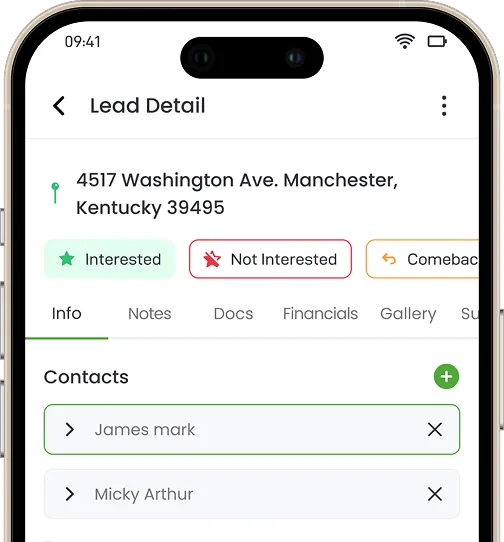
In Knockio, each of these steps lives on one unified job record. The customer info, address, assigned techs, custom fields, notes, surveys, appointments, uploaded photos, files, estimates, work orders, purchase orders, vendor bills, invoices, and payments all sit in one place. There’s a full activity history too, so you can see who did what and when.
When a customer calls asking about their job, anyone in the office can pull it up and answer in seconds.
Seeing All Your Jobs at Once
As you grow, you need to see the big picture. Knockio lets you set custom job statuses, like “Needs Diagnosis,” “Estimate Sent,” “Sold,” “Parts Ordered,” “Scheduled,” and “Invoiced.” You can then view jobs three ways:
- Board view: Drag jobs between status columns. Great for your morning meeting.
- List view: Sort and filter to find overdue estimates or unpaid invoices fast.
- Map view: See where jobs are so you can group calls by area and cut drive time.
You can also build separate boards. One for service calls. One for replacement installs. One for maintenance visits. Each can have its own statuses.
Turning Sold Jobs Into Work Orders
When a customer signs off on a system replacement, the real work starts. You need to order equipment, schedule the install crew, and pull a permit.
Knockio turns sold work into work orders for your own crew or a subcontractor. The work order holds the tasks, the schedule, and the material takeoff. You can create purchase orders to your supplier from the same job, and log vendor bills when they arrive. That lets you compare what the job sold for against what it cost you to do it.
Getting Paid Without the Chase
Slow payments hurt new shops the most. You already paid for the parts, the fuel, and your time.
Make paying easy. Knockio supports Tap-to-Pay on your phone at the job, Text-to-Pay links sent to the customer, credit card, ACH, and manual payment entry for checks or cash. For unpaid invoices, you can use the Automation Flow Builder to send automatic payment reminders. That way nobody has to make awkward follow-up calls.
Step 11: Market Your Business and Win Your First Jobs
You’re licensed, insured, stocked, and set up. Now you need the phone to ring.
Start With Google Business Profile
For home services, Google Business Profile is often the first place customers find you. Set it up fully:
- Add your service area
- List your services clearly (AC repair, furnace repair, heat pump installation, etc.)
- Upload real photos of your van, your team, and your work
- Post your hours and phone number
- Ask every happy customer for a review
Reviews matter a lot. A shop with 80 good reviews gets more calls than a shop with 5, even if the work is the same.
Build a Simple Website
Your site doesn’t need to be fancy. It needs:
- Your phone number at the top of every page
- A clear list of services
- The cities you serve
- Reviews
- An easy way to request service
Tap Your Network
Your first jobs often come from people who already know you. Tell friends, family, neighbors, and old customers you’re open. Reach out to real estate agents, property managers, and home inspectors. They see HVAC problems every week.
Knock on Doors Around Your Jobs
After you finish a job, the neighbors on that street share the same builder, the same age of home, and often the same equipment. Some HVAC companies send a tech or a sales rep to knock a few doors nearby with a simple message: “We just replaced the system at 1420 next door. Most homes on this street have the same units. Want a free check?”
This works best when you track it. Knockio started with door-to-door teams, so canvassing reps can log leads in the field. Once a lead turns into sold work, it becomes a job with the full job record.
Partner With Other Trades
Plumbers, electricians, and roofers get asked about HVAC all the time. Offer to refer work both ways.
Step 12: Build Recurring Revenue and Hire Your First Tech
Service calls pay the bills. Recurring revenue builds a company.
Sell Maintenance Agreements
A maintenance agreement is a yearly plan where the customer pays for regular tune-ups. It usually includes two visits a year, one for heating and one for cooling, plus perks like a repair discount or priority scheduling.
Why they matter:
- Steady income in slow months
- Loyal customers who call you first when something breaks
- Replacement leads, since you see old equipment before it fails
- A more valuable business if you ever want to sell
Track each agreement customer and their renewal date. In Knockio, you can store agreement details in custom fields on the customer’s job and schedule the next visit as an appointment, so nobody gets missed.
When to Hire Your First Employee
Signs you’re ready:
- You’re turning down work or booking out more than a week
- You spend evenings on paperwork instead of resting
- Your cash reserve can cover a new hire’s pay for two to three months
Your first hire could be a tech or an office person. Many owners wait too long to hire help in the office. If you’re spending 15 hours a week on phones, scheduling, and invoices, a part-time office manager may make you more money than a second tech. You get back to billable work.
When you hire, your systems matter even more. A new tech can’t read your mind. They need to open a job and see the address, the notes, the photos from the last visit, and the parts on the work order. That’s why setting up good systems in Step 10 pays off here.
Sample HVAC Business Plan
1. Executive Summary
Company name: Summit Air Comfort LLC (example)
Location: Serves the city and surrounding suburbs within a 30-mile radius
Owner: One licensed HVAC technician with 9 years of field experience and Universal EPA 608 certification
Business focus: Residential heating and cooling service, repair, and system replacement
Summit Air Comfort will provide fast, honest residential HVAC service with upfront flat-rate pricing. The company will start with one service van and grow to three techs and one office manager by the end of year three. Growth will come from service calls, system replacements, and a maintenance agreement program.
Funding request: $45,000 SBA microloan to cover van setup, tools, starting inventory, and working capital.
2. Company Description
Summit Air Comfort is a Limited Liability Company registered in [State]. The company holds a state mechanical contractor license, general liability insurance, commercial auto insurance, and a surety bond.
Mission: Keep homes comfortable with on-time service, clear prices, and work done right the first time.
What makes us different:
- Upfront flat-rate pricing before any work starts
- Good, better, best options on every replacement
- Text updates when the tech is on the way
- Digital estimates and easy payment options
3. Services Offered
| Service | Example Starting Price |
| Diagnostic visit | $89 – $129 |
| AC tune-up | $99 – $149 |
| Furnace tune-up | $99 – $149 |
| Common repairs (capacitor, contactor, igniter) | $150 – $450 |
| Refrigerant leak search and repair | $300 – $1,500 |
| Full system replacement | $7,000 – $16,000 |
| Maintenance agreement (yearly) | $180 – $300 |
4. Market Analysis
Service area: Roughly 180,000 residents, with most homes built between 1975 and 2005.
Key findings:
- Many homes have HVAC systems 15 or more years old, nearing the end of their useful life.
- The area has hot summers and cold winters, creating two busy seasons.
- 14 HVAC companies serve the area. Four are large shops with 10+ trucks. The rest are small operators.
- Common complaints in competitor reviews include missed appointments, no callbacks, and surprise pricing.
Target customers:
- Homeowners ages 35 to 70
- Homes valued above the local median
- Real estate agents and property managers needing fast repairs
5. Competitor Analysis
| Competitor Type | Strengths | Weaknesses | Our Edge |
| Large regional shops | Brand name, many trucks | Higher prices, long wait times | Faster response, owner on site |
| Small one-truck shops | Low prices | No online booking, slow invoicing | Professional systems, digital payments |
| Handymen | Cheapest | Often unlicensed | Licensed, insured, warrantied |
6. Marketing Plan
Year one budget: $6,000 to $9,000
- Google Business Profile setup and review requests after every job
- Simple website with service pages and online booking form
- Local search ads during peak summer and winter weeks
- Referral cards for past customers
- Partnerships with three real estate agents and two property managers
- Door knocking near completed replacement jobs
- Van wrap with phone number and website
Goal: 60+ Google reviews by the end of year one.
7. Operations Plan
Hours: Monday to Saturday, 7 a.m. to 6 p.m., with paid after-hours emergency calls.
Job workflow:
- Customer calls or books online
- Job created with customer info and notes
- Appointment scheduled and tech assigned
- Tech diagnoses, takes photos, and presents options
- Customer signs the digital estimate
- Work completed (or work order created for replacements)
- Invoice sent and payment collected on site or by text link
- Maintenance agreement offered
Software: Knockio’s HVAC Software & CRM for jobs, estimates, work orders, inventory, invoicing, and payments. Accounting software for bookkeeping and taxes.
Suppliers: Two local distributors with net-30 accounts.
Inventory: Van stock tracked by SKU with low stock alerts. Weekly restock from supplier purchase orders.
8. Management and Staffing
Year 1: Owner as sole technician. Spouse or part-time help for phones and scheduling.
Year 2: Hire one experienced service technician. Hire a part-time office manager.
Year 3: Add a second technician and an install helper. The office manager moves to full time.
9. Startup Costs
| Item | Cost |
| Used work van | $28,000 |
| Van shelving and wrap | $4,500 |
| Tools and equipment | $9,000 |
| Starting parts inventory | $5,500 |
| Licensing, exam, and bond | $1,200 |
| Insurance deposits | $3,500 |
| LLC and legal setup | $800 |
| Website and branding | $2,500 |
| Cash reserve | $15,000 |
| Total | $70,000 |
Funding sources:
- Owner savings: $25,000
- SBA microloan: $45,000
10. Financial Projections (Example)
| Year 1 | Year 2 | Year 3 | |
| Service and repair revenue | $140,000 | $230,000 | $330,000 |
| Replacement revenue | $90,000 | $210,000 | $360,000 |
| Maintenance agreement revenue | $8,000 | $22,000 | $40,000 |
| Total revenue | $238,000 | $462,000 | $730,000 |
| Cost of parts and equipment | $85,000 | $175,000 | $285,000 |
| Labor (excluding owner) | $12,000 | $95,000 | $170,000 |
| Overhead | $55,000 | $85,000 | $115,000 |
| Net profit before owner pay | $86,000 | $107,000 | $160,000 |
Key assumptions:
- Year one averages 3 to 4 paid calls per day during peak seasons
- 10% of service calls turn into replacement jobs
- 120 maintenance agreement members by end of year two
Break-even point: About $14,000 in monthly revenue, based on overhead and loan payments.
Common Mistakes New HVAC Business Owners Make
Learn from the owners who came before you.
1. Underpricing to win work. Being the cheapest is a race you can’t win. You’ll run out of cash before you build a name.
2. No cash reserve. Summer might be packed. Spring can be dead. Plan for slow months.
3. Mixing personal and business money. You won’t know if you’re profitable. Your accountant will charge you more to sort it out.
4. Running the business from text messages. Job details get lost. Customers get annoyed. Techs show up without the right info.
5. Not tracking parts. Every missing part is an extra trip, a delayed repair, and sometimes a lost customer.
6. Skipping maintenance agreements. One-time customers forget you. Agreement members call you first.
7. Waiting too long to get help in the office. If you’re doing invoices at 10 p.m., you’re burning out and leaving money on the table.
8. Chasing payments by hand. Collect at the job whenever you can. Automate reminders for the rest.
Frequently Asked Questions
How much does it cost to start an HVAC business?
A one-truck residential HVAC startup often costs between $43,000 and $138,000. The biggest costs are the van, tools, starting inventory, insurance, and a cash reserve. Buying a used van and starting with service calls only can keep costs on the lower end.
Do I need a license to start an HVAC business?
Yes. In the U.S., you need EPA Section 608 certification to handle refrigerants. Most states also require an HVAC or mechanical contractor license. Rules vary by state, so check with your state licensing board.
How long does it take to start an HVAC business?
If you already have the field experience and certifications, you can register, insure, and equip your business in roughly one to three months. Getting a state license can take longer if you need to schedule exams.
Is an HVAC business profitable?
It can be. HVAC work is steady because heating and cooling systems always need repair and replacement. Profit depends on your pricing, how well you control costs, and how many recurring maintenance customers you build.
What software does a new HVAC business need?
At minimum, you need a way to track customers and jobs, send estimates, schedule techs, send invoices, and collect payments. A field service management platform like Knockio handles those in one system, plus work orders, purchase orders, and inventory. You’ll still want accounting software for taxes.
Should I start with service or installs?
Most new owners start with service and repair. It needs less cash up front and builds trust with customers. Replacement jobs often follow naturally from service calls.
How do I get my first HVAC customers?
Set up a full Google Business Profile, tell your personal network, partner with real estate agents and property managers, and ask every customer for a review. Knocking doors near completed jobs can also bring in work fast.
Where can I get a sample HVAC business plan PDF?
You can use the sample HVAC business plan in this guide. Copy it into a document, replace the example numbers with your own, and export it as a PDF.
Build Your HVAC Business on the Right Foundation
Starting an HVAC business takes more than skill with a torch and gauges. You need the license, the insurance, the plan, and the cash. And you need a way to keep every job organized from the first call to the final payment.
The owners who grow are the ones who set up good systems early. They know what’s on every van. They send clear estimates with options. They turn sold jobs into work orders without dropping details. They get paid at the job, not three weeks later.
Knockio gives HVAC contractors one connected system for jobs, estimates, work orders, purchase orders, inventory, invoices, and payments, so you don’t have to juggle five to ten separate apps.
Want to see how it would work for your shop? Book a Free Demo and walk through your own workflow with the Knockio team.

Waqar Hussain leads SEO and digital media at Knockio, a field sales and field service management (FSM) platform for businesses managing sales reps, field teams, jobs, and customer appointments. He focuses on content strategy, search growth, and digital media to help more teams discover better ways to manage leads, jobs, and field operations.