Summary:
Field sales burnout doesn’t come from knocking on too many doors; it comes from losing hard-earned deals in the follow-up gap. This guide breaks down 9 actionable habits top-performing reps use to work smarter, not just harder. Learn how to map territories effectively, disqualify time-wasters fast, log outcomes in real time, and use digital contracts to close deals on the spot before they go cold.
Summarize with:
Three hundred doors. Four hours. Two conversations that went anywhere.
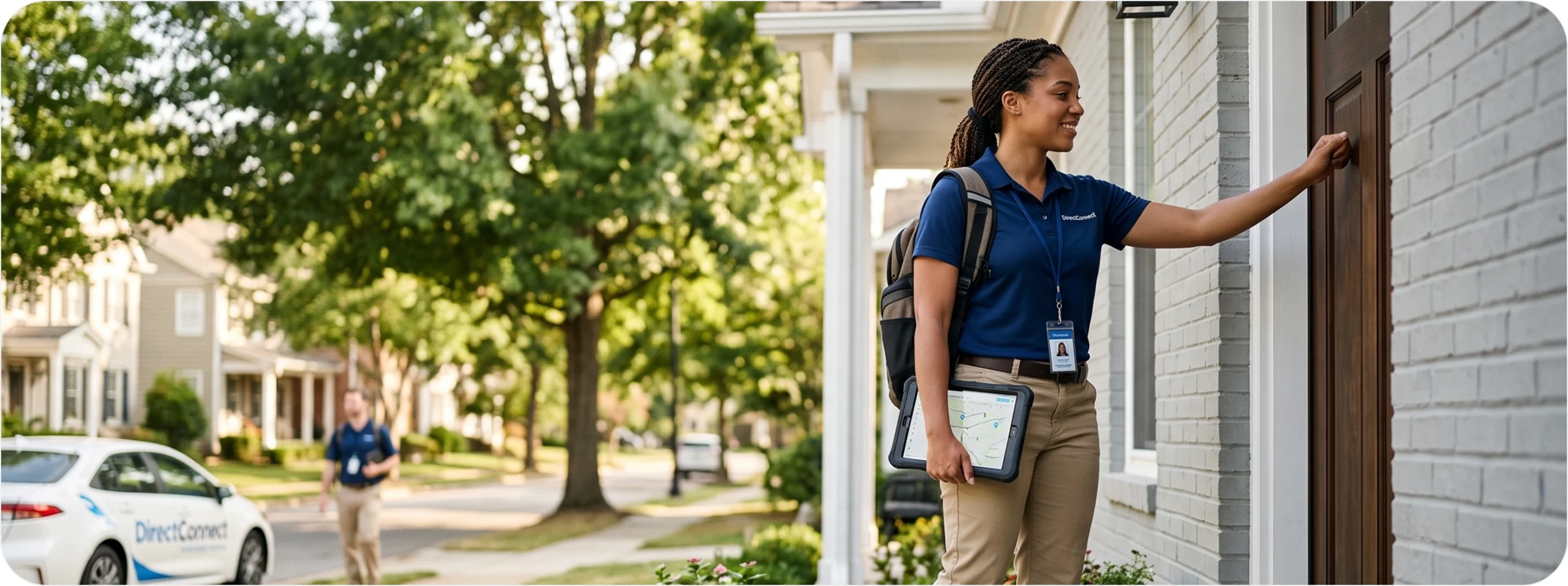
If that sounds like your Tuesday, you already know the problem. It isn’t effort. Nobody works harder than a rep who walks eight miles in the heat with a tablet under one arm. The problem is that hard work and smart work stopped being the same thing somewhere around door number sixty.
Let’s fix that.
Key Takeaways
- Volume without direction doesn’t scale. Efficient door-to-door sales comes from targeting the right territory, not just knocking more doors.
- Most field revenue is lost in the follow-up gap – the time between a conversation at the door and the next contact – not at the door itself.
- Logging outcomes in real time (not at the end of the day) is the single biggest lever for improving field sales follow-up.
- Closing on the spot with digital contracts prevents deals from cooling off after you leave.
- Tracking mid-funnel metrics (conversations, appointments, sits) diagnoses problems that a “close rate” alone can’t show.
The Quiet Leak Nobody Talks About
Think about Dan. Good guy. Great with people. He can read a homeowner’s face in three seconds flat.
Dan starts his day at 9 a.m. He drives to a neighborhood he feels good about. He knocks. Somebody says come back Thursday. Dan writes it on a sticky note. He knocks again. A woman asks for a price, so he says he’ll call her tonight. He writes that down too, on the back of a gas receipt.
By 6 p.m., Dan has knocked plenty. He also has seven scraps of paper, a phone full of half-typed notes, and no clear idea which streets he already covered. Thursday comes. He forgets the callback. The woman who asked for a price buys from someone else on Friday.
According to a classic Harvard Business Review study on sales responsiveness, delaying follow-up drastically kills conversion rates. Dan didn’t lose those deals at the door. He lost them in the gap between the door and the follow-up.
That gap is where most field revenue quietly dies. Not in rejection. In forgetting.
Why “Knock More Doors” Is Bad Advice
Every sales manager has said it: Volume solves everything. Just push harder.
Here’s the truth: volume without direction is just cardio.
Two reps knock 100 doors each. Rep A wanders. Rep B works a tight block where the roofs are the same age and the neighbors talk to each other. Same effort, wildly different results. One is guessing. The other is aiming.
Working smart in the field isn’t about speed, it’s about removing the dumb stuff. The driving in circles. The double-knocking the same house twice in a week. The “wait, did anyone follow up with that guy?” Cutting that waste means more of your day goes into actual conversations.
So how do the best teams pull that off? A few habits show up again and again.
1. Decide Where You’re Going Before You Get in the Truck
Pick your area the night before, not the morning of, and definitely not while sitting in the driveway with the engine running.
Good areas share signals: similar home age, similar income, a recent storm, a competitor’s yard signs, a utility rate hike. Those signals cluster. When you find one cluster, work it flat before moving on.
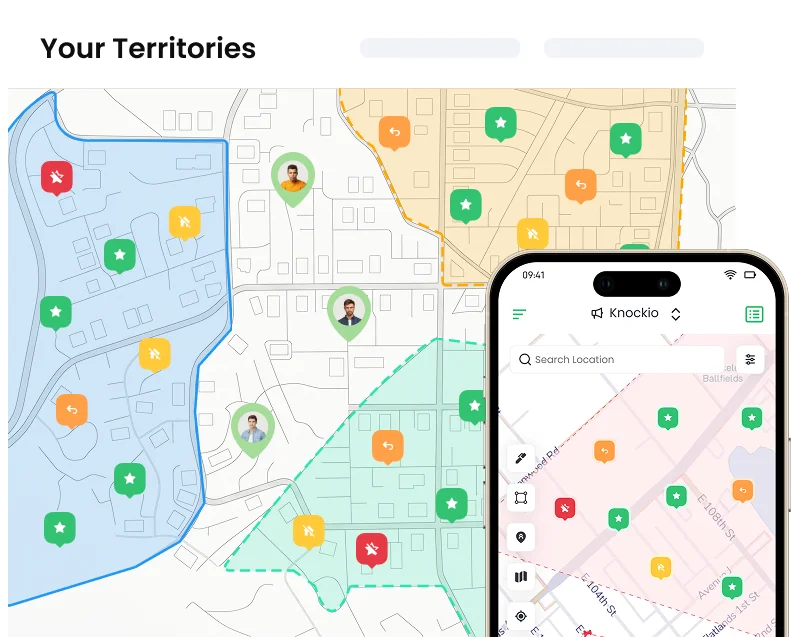
This is also where territory mapping software earns its keep. When territories are drawn out and assigned inside a platform, two reps stop stepping on each other’s toes, and nobody knocks a house that was already handled last week. The map remembers so your brain doesn’t have to.
2. Make the First Ten Seconds Boring
Wild claims make people close doors.
Your opener should sound like a neighbor, not a pitch. Short. Calm. A little plain. Something like: “Hey, I’m working on a few houses on this street this week — quick question for you.”
Notice what’s missing: no excitement, no “amazing offer,” no script voice. People have a built-in alarm for sales energy. The second it goes off, they stop listening and start hunting for an exit line.
Be the person who’s clearly done this a thousand times and isn’t nervous about it.
3. Disqualify Fast: It’s a Kindness to Everyone
The costliest minutes of your day are the ones spent with someone who was never going to buy.
Ask the hard question early. Do they own the home? Is there a decision-maker who isn’t standing here? Do they already have a contract signed? Get it out in the open in the first ninety seconds.
A friendly “no” at minute two beats a polite “maybe” at minute twenty. Move on — there are forty more doors on this street.
4. Log It at the Door, Not at Midnight
This is the single biggest fix most teams can make for field sales follow-up.
Notes written six hours later are fiction. You’ll remember the man who yelled and the dog that got loose. You won’t remember that the house with the blue shutters said they’re getting quotes after the 15th.
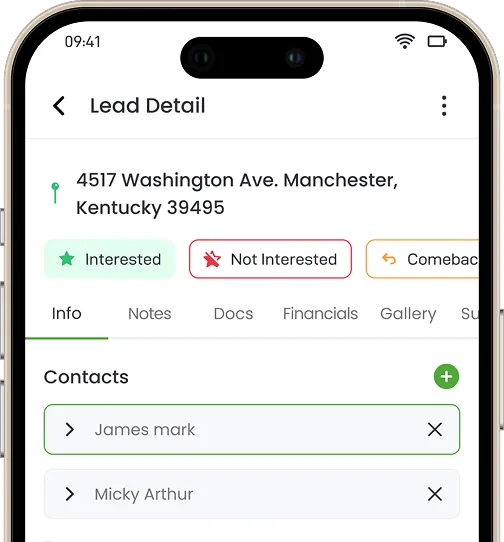
So tag the outcome right there on the step: not interested, come back, hot, appointment set. When each pin on the map carries its own status and note, tomorrow’s route builds itself. Features like lead disposition and follow-up scheduling do exactly this, so the second visit starts warm instead of starting over.
Thirty seconds of typing at the door saves an hour of guessing later. That math never loses.
5. Kill the Paperwork Before It Kills Your Close
You had them. They said yes. And then you said the deadly sentence: “Let me email you the contract tonight.”
Never do that.
Excitement has a shelf life, and it’s shorter than a drive home. Spouses have opinions. Cousins have “a guy.” The internet has reviews. Every hour between “yes” and “signed” is an hour for the deal to cool.
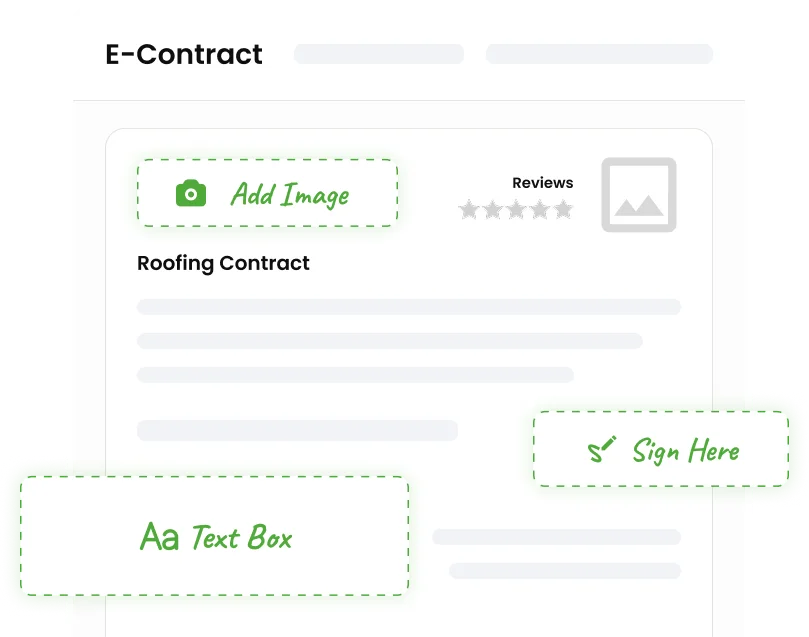
Close it on the spot: pull up the agreement on your tablet, capture a signature with a finger, snap photos of the roof or the meter or the yard, and send the confirmation before you’re back at your truck. Digital contracts and on-site e-signatures aren’t a luxury — they’re the difference between a sale and a story about a sale.
Stop letting signed deals cool off in an inbox.
Generate estimates, send digital contracts, and collect signatures instantly at the door.
6. Give Your Day a Shape
Random days produce random numbers. Try blocks instead:
- Morning: Callbacks and appointments. People are patient early.
- Midday: Cold territory. Fewer people home, but you cover ground and set evening returns.
- 4–8 p.m.: The golden window. Doors get answered, and both decision-makers are home. Protect this block like rent money.
- End of day: Ten minutes of cleanup. Confirm tomorrow’s appointments. Close the loop on anything half-finished.
That last ten minutes feels optional. It isn’t. It’s the hinge the next day swings on.
7. Measure the Middle, Not Just the End
Most teams track closed deals. That’s the scoreboard, not the game.
Watch the middle numbers instead:
- Doors knocked → real conversations
- Conversations → appointments set
- Appointments → sits (did they actually stay home?)
- Sits → signed
Now you can find the leak. A rep who knocks a ton but converses rarely has an opener problem. A rep with great conversations and no appointments has a closing-for-next-step problem. A rep who sets ten appointments and sits three has a confirmation problem.
Same “low numbers,” three completely different fixes. Without mid-funnel metrics, you’d just yell “knock more” at all three and wonder why nothing changed. Reporting boards and leaderboards put these gaps in plain sight — that’s the whole point. You can’t coach what you can’t see.
8. Fix the Team Rhythm, Not Just the Reps
One rep can get by on memory and hustle. Five cannot.
The moment a team grows, small problems turn into expensive ones. Two people work the same block. A hot lead sits in one rep’s phone while another rep drives past that exact house. A new hire spends his first month guessing where to go because nobody told him which streets were already burned.
Managers fix this by making the day visible — not by hovering, but by knowing. Which areas got covered today? Who has eleven pending follow-ups and no plan for them? Where did the crew actually spend their afternoon?
Live tracking and shared maps answer that in seconds. It changes the tone of your coaching, too. Instead of “why are your numbers down,” you get to say “you’re setting appointments fine, but half of them aren’t sitting, let’s work on your confirmation call.” One of those conversations makes reps defensive. The other makes them better.
9. Protect the Human Doing the Work
Field sales is a physical job wearing a white-collar costume.
Water. Food that isn’t a gas station burrito. Shoes that don’t wreck your feet. A real break in the afternoon instead of pushing through and getting sloppy at hour six.
And here’s the mental piece: a “no” isn’t about you. It’s about timing. That “no” was almost always decided before you walked up. Reps who take it personally slow down. Reps who treat it as weather keep moving.
Keep moving.
The Part That Actually Changes Things
Reading this doesn’t change tomorrow. Picking one thing does.
So pick one. Just one.
Maybe it’s logging every outcome at the door instead of at midnight. Maybe it’s ending your day with ten minutes of cleanup. Maybe it’s carrying the contract on your tablet so nothing waits until tonight.
Run it for two weeks. Watch the middle numbers. You’ll feel the difference before you see it — fewer forgotten callbacks, less driving in circles, more days where the work actually adds up to something.
The reps who win out there aren’t the ones with magic words at the door. They’re the ones who stopped losing what they already earned.
Go earn some, and keep it this time.
Ready to stop losing deals in the follow-up gap? See how Knockio helps field teams map territory, log outcomes at the door, and close on the spot →

Syed Junaid is the Marketing Lead & Content Strategist at Knockio, where he helps field sales and service businesses eliminate software bloat and scale their operations. He writes about B2B SaaS growth, field sales strategies, and how contractors can eliminate the “Duct-Tape Tax” to run more profitable businesses.