Summary:
HVAC technicians make a median of $61,010 per year ($29.33 per hour) as of May 2025 BLS data. Entry-level techs start around $31,000 to $42,000. Mid-career techs running their own truck earn $50,000 to $65,000. Senior and commercial techs land between $70,000 and $91,000, and master techs or contractors top $85,000 to $120,000. Overtime adds another $10,000 to $25,000 in peak season, which is how a meaningful share of the top 10% clears $110,000 without owning a business
Summarize with:
About $55,000 separates what the bottom earners in this trade take home from what the top earners do. That gap is the real answer to how much HVAC technicians make. The average barely tells you anything.
For the record, the national median runs $61,010 a year, or right around $29.33 an hour, according to recent figures from the U.S. Bureau of Labor Statistics Occupational Outlook Handbook for HVACR mechanics and installers. Fine as a reference point. Terrible as a prediction, because hardly anybody actually earns it.
Four things decide where you land on that scale. Years on a truck. What licenses and certs you’re carrying. Residential or commercial. And what market you’re swinging a gauge set in. Move one of them and you’ve shifted the number by five figures.
Here’s the whole thing, from what a first-year helper pulls down to what that same helper ends up costing the company signing his cheques.
How much do HVAC technicians make in 2026?
National Average HVAC Salary & Pay Ranges
BLS splits the trade into percentiles, which is far more useful than any single average:
- Lowest 10%: under $40,050 a year (roughly $19.25/hr). Apprentices, helpers, install crews in cheap labor markets.
- Median (50th percentile): $61,010 a year ($29.33/hr). A solid tech running his own calls.
- Top 10%: above $95,210 ($45.77/hr and better). Senior commercial guys, controls specialists, union journeymen, service leads.
A note on the numbers: the national median benchmark has been sitting in the $59,810 to $61,010 band across the last two OEWS reporting cycles. Wage data lags by roughly a year, and cost-of-living differences plus inflation adjustments shift what those figures actually mean market to market. Treat any national number as a starting line, then check your metro.
Something else those percentiles miss. Overtime in HVAC isn’t an occasional bonus you might catch. It’s a season, and it shows up every single year. Between time-and-a-half past 40, on-call stipends, and holiday premiums, plenty of techs tack on $10,000 to $25,000 from June through September alone.
Which is how a good chunk of that top 10% clears $110,000 without owning a business, carrying a truck note, or ever making a student loan payment.
HVAC Salary Breakdown by Experience Level
This trade does one thing better than most careers: the road is marked. You pick up skills, you earn independence, and the money follows both. Almost always in that order, and rarely out of it.
| Career Tier | Years in Trade | Annual Salary Range | Hourly Equivalent | Level of Independence |
| Entry-Level / Apprentice | 0 – 2 | $31,000 – $42,000 | $15 – $20 | Works under direct supervision at all times. |
| Mid-Level Technician | 2 – 5 | $50,000 – $65,000 | $24 – $31 | Runs a solo truck and full call sheet. |
| Senior / Journeyman | 5 – 10 | $70,000 – $91,000+ | $34 – $44 | Handles escalations, signs off on work, mentors apprentices. |
| Master / Contractor | 10+ | $85,000 – $120,000+ | $41 – $58 | Runs a service department or owns the business. |
Entry-Level / Apprentice: $31,000 to $42,000 Second set of hands. That’s the whole job title, whatever the paperwork says. Pulling equipment, brazing line sets while somebody stands over your shoulder, running duct, swapping filters, washing condenser coils in July. Almost none of it is your call, and it shouldn’t be yet. What you’re really doing is stacking hours toward licensure and, if you’ve got any sense, watching why the lead tech won’t touch a charge until he’s checked superheat and subcooling.
Mid-Level Technician: $50,000 to $65,000 Your truck, your call sheet, nobody looking over your shoulder. A no-cool or a no-heat gets worked without a phone call to anybody. Change-outs stop being an event. Somewhere in here the wiring schematics quit looking like hieroglyphics and start reading like sentences. Pay jumps hardest at this stage for one plain reason: you’ve stopped costing the shop money and started making it some.
Senior / Journeyman: $70,000 to $91,000+ The calls that come back get handed to you. Intermittent faults, mismatched systems, the leak two other guys already chased and gave up on, that rooftop unit with the control board everybody’s been ducking since spring. You’re signing off on other people’s work now, dragging apprentices along behind you, and getting first look at the overtime board.
Master / Contractor: $85,000 to $120,000+ Master license in hand, you’re running a service department or running your own shop. The conversation stops being about hourly rate and turns into margin, crew productivity, and whether you priced the job right in the first place. The ceiling goes way up. So does everything landing on you personally when a job goes sideways.
HVAC Pay by Specialization & Industry Role
Not every corner of HVAC pays the same, and the spread has less to do with how hard you sweat than with liability and how ugly the diagnostics get.
| Role Type | Typical Annual Salary Range | Why the Pay Differs |
| Residential Install | $42,000 – $62,000 | High-volume, repeatable work. Physically demanding, lower diagnostic bar. |
| Residential Service | $52,000 – $80,000 | Diagnostics plus customer face-time. Techs earn commissions on top of base. |
| Commercial HVAC | $60,000 – $95,000 | Rooftop units, VAVs, chillers. High downtime costs, tighter response windows. |
| Commercial Refrigeration | $65,000 – $100,000+ | Failed racks spoil inventory. Round-the-clock call rotations push rates up. |
| Automation / Controls (BAS) | $75,000 – $115,000+ | Blends mechanical with IT. BAS programming skills are scarce and priced high. |
Worth noting that BLS backs this up on the industry side. Techs working wholesale trade posted a median around $71,190, well ahead of the roughly $60,030 median for guys at plumbing and HVAC contractors. Where you sit in the supply chain moves the number too, not just what equipment you touch.
Picking a lane strictly for money? Controls and commercial refrigeration have the steepest ceilings in the trade, no contest. Both of them favor the guy who doesn’t mind chasing an electrical gremlin for two hours and thinking his way through it. Wrench time alone won’t carry you in either one.
Geographic Pay Differences & Highest Paying States for HVAC Techs
Location swings the number harder in HVAC than in most trades. Union density accounts for some of it, state licensing rules for more, and plain climate load handles the rest.
| State / District | Approximate Median Annual Salary | Primary Driver |
| District of Columbia | ~$81,000 | Dense commercial and federal building stock, high union presence |
| Alaska | ~$79,000 | Brutal heating demand, small labor pool, remote-site premiums |
| Massachusetts | ~$74,000 | Strong union scale, strict licensing, aging building inventory |
| California | ~$72,000 | Title 24 energy code complexity, high cost of living |
| Washington | ~$71,000 | Commercial construction volume and heat pump retrofit demand |
Those are approximations off the state-level OEWS tables, and they move every reporting cycle. Now put them next to Arkansas, Mississippi, West Virginia, and a fair bit of Alabama, where medians tend to sit between $46,000 and $52,000. Big difference on paper.
Before you load the van for Boston, though, do the housing math. A tech making $74,000 in Massachusetts and one making $52,000 in Tennessee can wrap up the year with roughly the same money left over once rent, taxes, and insurance take their cut. Some of the best pay-to-cost ratios anywhere are sitting in metros inside otherwise low-wage states. Nashville, Dallas, Phoenix, Charlotte. Worth a look before you assume the coasts are the answer.
How to Increase Your HVAC Technician Earnings
The guys out-earning everybody around them almost always did the same short list of things:
- EPA 608 Universal certification. You need it to touch the refrigerant, full stop. Going Universal instead of stopping at Type I or Type II keeps you on the board for every call dispatch puts out.
- NATE certification. Most shops hang $2 to $5 an hour on it, and plenty treat it as the gate you have to walk through before anybody calls you senior.
- Overtime and on-call rotations. Peak-season time-and-a-half plus on-call money (usually $100 to $250 a week) is the biggest lever you’ve got that doesn’t involve changing specialties.
- Sales and performance incentives. Residential shops commonly pay 5% to 10% on accessories, maintenance agreements, and replacements. Two techs with identical skills can finish the year $15,000 apart because one of them is comfortable talking to a homeowner and the other heads straight back to the truck.
- A2L refrigerant and heat pump proficiency. The refrigerant transition opened a training gap nobody has closed yet. Anyone already solid on A2L handling and cold-climate heat pumps gets first crack at the premium work.
- BAS and controls training. Even a rough working knowledge of building automation makes a residential tech look a lot more interesting to a commercial employer.
Fully Burdened Labor Cost: What an HVAC Tech Costs an Employer
If you’re the one signing checks, throw out the median. Your number is fully burdened labor cost, and it’s the reason healthy shops bill $150 to $250 an hour for work performed by a guy earning $30.
Here’s how that $30/hr technician really prices out:
| Cost Component | Approximate Hourly Impact |
| Base wage | $30.00 |
| Payroll taxes (FICA, FUTA, SUTA) | $2.60 – $3.30 |
| Workers’ compensation | $1.50 – $3.00 |
| Health insurance and benefits | $2.50 – $4.50 |
| PTO, holidays, paid training time | $1.50 – $2.50 |
| Truck payment, fuel, insurance, maintenance | $3.00 – $5.00 |
| Phone, tablet, software, uniforms, tools | $0.75 – $1.50 |
| Fully Burdened Total | $42.00 – $48.00+ |
Worth flagging that the workers’ comp line runs high in this trade for a reason. BLS puts HVAC among the occupations with the highest injury and illness rates in the country, which is exactly what your carrier is pricing when the mod factor comes back.
And none of that touches non-billable hours yet. Pay a tech for 40, bill 28 of them once you back out drive time, shop time, callbacks, and warranty work, and your real cost per billable hour lands closer to $60 or $68. Shops pricing off raw wage instead of burdened cost are the ones running flat out all summer who still can’t work out why payroll gets tight in October.
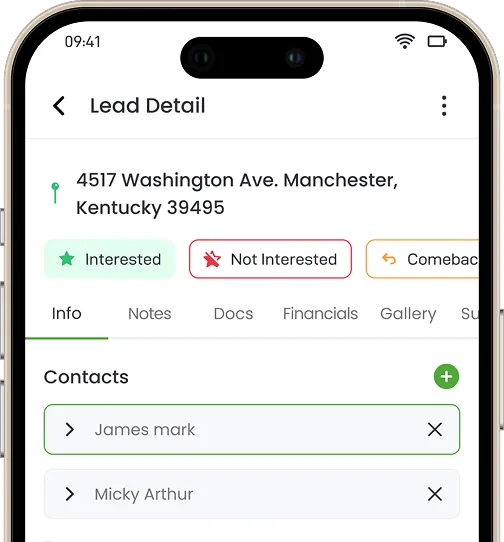
Most of that 12-hour gap is drive time and dispatch slop, and it’s the one line in the burden table you can actually shrink. That’s the problem Knockio, an HVAC business app is built around. It maps your techs live, routes calls by proximity instead of by whoever answered the phone first, and carries the job from the estimate through the work order to the invoice without anyone re-keying it at the shop. Pull two hours of windshield time out of a tech’s week and you’ve cut his real cost per billable hour by four dollars or so. If your outfit also knocks doors for maintenance agreements or replacements, the same platform runs the canvassing side, so the lead a rep captures on a porch lands in the service calendar instead of a notebook.
There’s a flip side to the burden math that owners tend to miss. Bumping a productive tech $3 an hour costs you about $4.20 to $4.80 once the burden gets applied. Set that against what losing him actually costs: recruiting, onboarding, and the hole a new hire leaves in productivity usually runs $15,000 to $25,000. The raise is the cheaper move nearly every time, and a lot less painful in July.
Future Outlook and Job Growth in the HVAC Trade
The demand side of this is about as safe a bet as you’ll find anywhere. BLS has HVACR mechanics and installers growing 11% between 2025 and 2035, which the agency classifies as much faster than average, against 3% across all occupations. That works out to roughly 40,600 openings a year on a base of about 440,900 jobs, and most of those openings come from guys transferring out or retiring rather than from new positions.
Commercial construction is doing a lot of the lifting, data centers in particular, and residential building adds to it. Then stack on the A2L transition, the shift toward heat pumps, efficiency standards that keep ratcheting up, and a mountain of equipment already living on borrowed time. The work is booked for the next twenty years.
It’s also that work automation hasn’t laid a glove on, which is more than most white-collar careers can claim right now. Software will size a system and read a fault code all day. It still can’t crawl into a 130-degree attic, braze a line set, pull a proper vacuum, and then stand in a driveway explaining to a homeowner why her evaporator coil turned into a block of ice in the middle of August.
So if you’re weighing the trade, here’s the realistic version. Year one, $35,000 to $40,000. Year four or five, somewhere near $60,000 if you actually apply yourself. Year ten, north of $90,000 is well within reach. Get the EPA 608 Universal, chase the NATE certs, take the on-call rotation everybody else gripes about, and pick a specialty with room above it. Competence gets paid faster in HVAC than in just about anything else you can start without a degree.
Read also door to door sales statistics

Waqar Hussain leads SEO and digital media at Knockio, a field sales and field service management (FSM) platform for businesses managing sales reps, field teams, jobs, and customer appointments. He focuses on content strategy, search growth, and digital media to help more teams discover better ways to manage leads, jobs, and field operations.