Summary:
A storm damage expert inspects roofs after hail, wind, and water, spots hidden damage early, and documents everything so insurance claims get approved. Speed matters most, since the first 24 to 48 hours decide how much a homeowner saves. Roofing teams that respond fast, inspect carefully, and follow up well become the company neighbors call first. With Knockio, storm crews track every job, map territories, store inspection photos, collect payments, and move work from first knock to paid invoice in one connected system.
Summarize with:
A storm rolls through, and the phone starts ringing. “Is that a leak? Did shingles fly off? Why is water coming from over there?” The homeowner is rattled. What they want is simple. Someone who shows up fast, looks closely, and explains the situation in plain words without the panic.
That is the job of a storm damage expert. No guessing. No vague maybes. They read hail bruising in seconds, know how wind lifts and creases shingles, and understand every quiet spot where water likes to hide. When they show up, the homeowner can finally breathe.
But a good storm damage expert does more than point at the roof. They also understand the insurance side of the job. They walk the homeowner through the claim, push for the coverage that is actually owed, and keep repair costs from snowballing. That alone lifts a heavy weight off a stressed family.
Why Storm Knowledge Matters for Roofing Sales Teams
Roofing companies that lean into storm response tend to grow faster. The reason is simple. When a storm hits, demand shows up all at once. The company that inspects quickly, handles the paperwork cleanly, gives a clear quote, and follows up without dropping the ball is the one that gets the call. Then it gets the neighbor’s call. Then the whole street.
The good news for owners is that this is a skill, not a personality trait. With the right training and the right tools, almost anyone on your crew can become the steady storm expert who turns a chaotic week into booked work.
What Is a Storm Damage Expert?
Helping Homeowners When They Need It Most
When the weather turns ugly, the storm damage expert is the person who climbs up and checks the roof. From the ground, a roof can look perfectly fine. A close inspection often tells a very different story. Cracked shingles. Bent vents. Water that already found a way in. These pros have trained eyes, so they catch the small clues before a small clue becomes a five-figure repair.
They also do not just climb up and start pointing. They know roof safety, local building rules, and how to keep a damaged home from getting worse before repairs start. And they explain it like a human. No scare tactics, no jargon dump. Just clear guidance. That calm is what builds trust fast, especially with a homeowner who is shaken and unsure.
Then there is the insurance know-how. Most homeowners have no idea what counts as proof or how to describe damage in a way an adjuster respects. So the expert takes over. They shoot the right photos, write a clear report, and document everything so it actually holds up. More claims get approved, repairs move forward, and the contractor ends up helping more families.
Think of a storm damage expert as three roles in one. Roof inspector. Insurance translator. Steady guide.
The Real Cost of Storm Damage Most Homeowners Miss
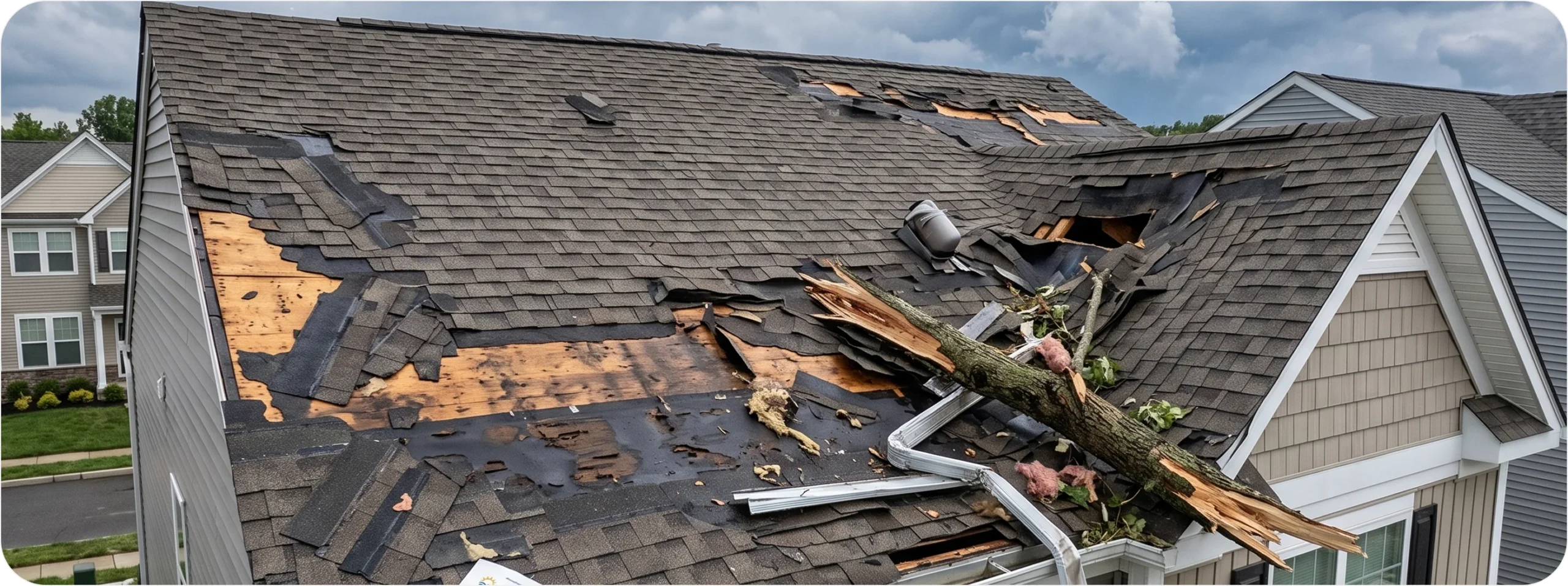
Storm damage is rarely the movie version with smashed windows and shingles in the yard. Usually it sneaks in. A tiny leak under one shingle that nobody can see from the sidewalk. With each rain, the insulation soaks up water, the wood softens, and mold quietly settles in. Months later a brown stain shows up on the ceiling, and by then the cheap fix is long gone. Now it is bigger, scarier, and far more expensive than it ever needed to be.
This is why timing is the whole game. Get an expert on the roof in the first 24 to 48 hours and a homeowner can dodge the worst of it. Even in those first hours, the signs are often there. Torn shingles. A small leak. A damp patch in the attic.
Wind plays a sneaky role too. It does not always rip shingles off. Sometimes it just nudges them loose. From the yard it looks like nothing. But those small gaps let rain creep in, bit by bit. Gutters bend, clog, and overflow, and water runs down the walls instead of away from the house. Everything looks normal until suddenly it does not.
Insurance adds pressure to move fast. Wait too long and a carrier may deny the claim, blaming “poor maintenance” instead of the storm. A storm damage expert closes that window. They inspect quickly, document properly, and hand the homeowner solid proof before any deadline slips by.
Types of Storm Damage Every Contractor Must Spot
The Sneaky Problems Hail, Wind, and Water Can Cause
You will not always see shingles flying or a tree on the roof. Most of the time the real trouble hides where nobody looks. That is exactly why a trained eye matters. A small leak, a bent vent, water creeping into the attic, each one grows into a real problem if it sits unnoticed.
Hail damage. Those little ice balls feel harmless, but they bruise shingles and knock loose the granules that shield the roof. Water finds those weak spots and slips in. Hail also cracks skylights, dents gutters, and chews up siding, often without an obvious sign until the damage has already spread.
Wind damage. Strong gusts lift shingles and leave them bent or creased. Even if they settle back down, they often cannot reseal. The gaps left behind invite rain in during the next storm.
Water and ice damage. Heavy rain slides under loose shingles and reaches the attic without a sound. In cold weather, ice dams block melting snow from draining, so water backs up under the roof deck with nowhere to go. That is when mold, soft wood, and slow hidden rot begin.
Here is the hard part. Most homeowners assume everything is fine because there is no obvious hole. Meanwhile the damage grows, quietly, until it becomes an expensive surprise. A trained storm damage expert knows the warning signs cold and catches the problem early, which is the difference between a quick fix and a gut renovation.
Storm Damage Inspections: What Pros Do Differently
A Careful Process That Protects the Home Long-Term
A real storm damage expert does far more than glance at a roof. They follow a clear, repeatable process so nothing slips through.
First comes safety. They check for live wires, broken glass, and unstable sections before anyone goes up. Then the full roof inspection. Shingles, ridge caps, gutters, flashing, vents, and skylights, all of it, with photos and video from multiple angles so both the homeowner and the adjuster can see exactly what is going on. Many also check the attic for damp insulation, water stains, or pinholes of daylight.
A good inspector does not rush. They sit with the homeowner, explain what they found, and flag what needs attention now versus later. Honest, plain, no scare talk. That is what earns trust.
Then they build the documentation, because this is the proof the insurance company needs. And in claims, coverage usually comes down to how well the damage was documented.
An early, careful inspection saves a homeowner a lot of stress and a lot of money.
Mastering Insurance Claims for Homeowners
Experts Help Homeowners Get the Coverage They Deserve
Insurance claims are confusing and stressful. Rules, paperwork, and the occasional fight over what counts as “real” storm damage. A storm damage expert guides the homeowner through all of it.
Documentation that adjusters accept. Carriers do not approve claims without solid proof. So the expert takes clear, labeled photos and notes exactly what they find. More importantly, they tie each problem to the storm rather than to age or neglect. That framing is often what gets a claim approved.
Speaking the insurance language. Most homeowners do not know roofing codes or claim terms, and adjusters sometimes miss damage that is hard to see from the ground. The expert speaks up, points out every detail that matters, and makes sure nothing gets quietly written off.
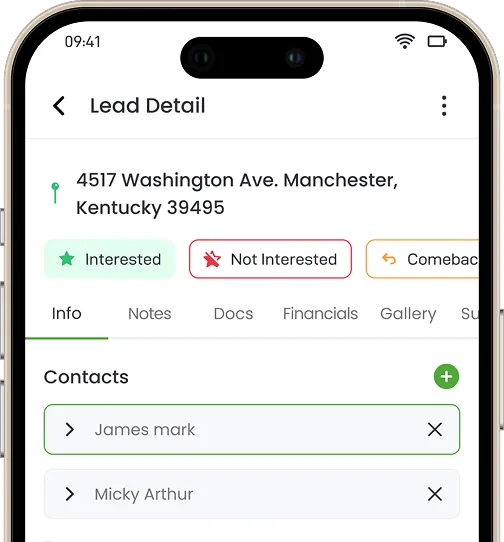
Keeping everything organized and on record. This is where the right software earns its keep. Inside a system like Knockio’s roofing CRM, every photo, report, note, and message lives on the job itself. A job holds the homeowner’s information, the address, the inspection media, the documentation, and the full activity history in one place. So when an office staffer or adjuster needs an update, it is already there. No digging through email threads or a glovebox full of paper.
The payoff is real. Better-documented claims tend to land better coverage, which means less stress for the homeowner and less out-of-pocket cost.
How a Storm Damage Assessment Works Step by Step
A storm damage assessment is not a single look. It is a process built to surface every problem and protect the homeowner down the road.
Step 1: Initial call and quick safety check. After the storm, the homeowner calls. The expert asks what they noticed and checks for urgent risks like major leaks or falling debris, then advises how to stay safe until the crew arrives.
Step 2: Full roof and property inspection. Roof, gutters, vents, siding, and windows all get checked for cracks, dents, and lifted shingles. The attic gets a look for water intrusion. Many pros bring drones and measurement tools so nothing gets missed.
Step 3: Detailed report with evidence. Every bit of damage gets documented with photos and notes. Inside Knockio, those photos and notes attach directly to the job, so the report comes together from real field data instead of memory. A storm crew can also use a custom job status, say “Inspected, Awaiting Adjuster,” to show exactly where that home sits in the pipeline.
Step 4: Repair plan and insurance support. The expert lays out the options, from a patch repair to a full replacement, and stands beside the homeowner through the claim so the coverage matches the real scope of work.
A solid assessment removes the guesswork and shows a homeowner exactly what it takes to make the home safe again.
Why Choose a Local Storm Damage Professional Instead of Out-of-State Contractors
After a big storm, out-of-town crews flood in and pitch fast service. The trouble starts when they vanish the moment the job wraps, leaving the homeowner alone if something goes wrong later. Local experts are a different story. They live and work in the area, know the local weather and building rules, and stick around long after the storm passes.
Strong knowledge of community needs. Local pros know which roofing materials hold up best to the storms your area actually gets. They know the city permits and code, which keeps repairs legal and surprise-free. And because they have seen the damage patterns in nearby neighborhoods, they look harder in the right places.
Easy warranty support and continued help. If a leak shows up months later, a local team is still a phone call away. No tracking down a crew that left the state. There is real comfort in trusting someone from your own community.
Protection from scams. Out-of-state operators have a reputation for rushing and cutting corners on the way to the next town. Local storm damage experts do work that is meant to last, because their name is on the line in their own backyard.
Tools and Tech Top Experts Use Today
Storm damage experts have moved well past ladders and flashlights. Today’s tools make inspections faster, safer, and far more accurate.
Drones for roof views you cannot reach. Climbing a steep, wet roof after a storm is dangerous. Drones capture high-resolution images from above and catch dents, cracks, and lifted shingles that are easy to miss from the ground.
Digital damage reports for better proof. Organized notes and clear photos make repairs easier to plan and claims easier to file. This is where field software does the heavy lifting. Reps capture everything on their phone, and it lands on the job record instantly, so the homeowner is never confused during a claim discussion.
Moisture detection and measurement tools. Some damage hides under the surface. Moisture meters find damp spots inside the roof, and measurement tools pin down exactly how much needs fixing, which keeps surprise costs off the final bill.
Faster communication with homeowners. Good tools let experts answer questions and share updates quickly, so homeowners are not left waiting weeks to learn what is happening. Everything stays out in the open.
The right tools do more than spot problems. They help the expert make sure repairs are done right and the home is ready for the next storm.
How Knockio Helps Storm Damage Experts Win More Jobs
One System for the Storm-Season Rush
Storm season moves fast, and a stack of disconnected apps cannot keep up. The bigger problem for most roofing companies is the patchwork: one tool for canvassing, another for photos, another for estimates, another for invoices, another for payments. Knockio replaces five to ten of those tools with a single connected system, which is exactly what a crew needs when the work piles up after severe weather. As a roofing sales and service CRM, Knockio keeps canvassing, inspections, estimates, and payments on the same job record instead of five different logins.
It starts with the field. Every homeowner visit, inspection, and conversation lives on the job in the app. No lost notes, no forgotten addresses, and updates land in real time, so the office always knows where things stand.
Routing gets simpler too. Knockio maps your territories and points reps toward the streets that need attention first. That is not about watching people. It is about field control. When a whole neighborhood gets hit, managers need to see which streets are covered, which reps are stuck in a slow pocket, and where a team lead should jump in to help. With map view, assigned areas, rep activity, and live field updates, leaders can protect the day while it is still happening, not figure out what went wrong after it is over.
Documentation stays painless. Reps snap photos, add notes, and save inspection details from their phone, all attached to the job. When the office needs to process a claim or build a proposal, it is already there.
Then the work actually moves. A storm job does not stop at the inspection. Knockio carries it forward. An approved estimate, built from a template with optional line items and a digital signature for customer acceptance, can turn into a work order with tasks, crew schedules, materials, and photos. When the roof is done, an invoice goes out from the same job, and the homeowner can pay by text to pay, tap to pay, credit card, or ACH. Payments can also be entered by hand for accounting. Either way, the job record updates itself.
Follow-up is where most companies leak revenue, so Knockio’s automation handles the nagging parts for you. The Automation Flow Builder can fire payment reminders, schedule tasks, send the homeowner a text or email, and nudge a stalled claim forward without anyone setting a manual reminder.
The result is a storm crew that responds faster, documents cleaner, and gets paid sooner, with the whole team working off the same job from first knock to final payment.
How to Become a Trusted Storm Damage Specialist
Training, Communication, and Reputation Make All the Difference
You do not become a storm damage expert overnight, but the path is clear.
Start with training. Roofing pros can take programs like HAAG certification or local roofing and safety courses. These teach you what storm damage actually looks like, how weather affects different materials, and what an adjuster expects in a real report.
Then work on communication. Homeowners are not just hiring a contractor. They are hiring someone they can trust with a stressful situation. Explain your findings in plain language. Show before and after photos. Point out the risks and connect each repair to protecting their home. People remember the contractor who took the time to make it make sense.
Reputation grows from small, genuine actions in your community. Be easy to reach. Offer free inspections. Hand over a detailed report. One happy homeowner turns into several calls from the neighbors, especially when you ask for an honest online review that helps the next family find you when the next storm rolls in.
And nothing builds trust like consistency. Show up on time. Keep your promises. Keep homeowners updated all the way through. When people feel cared for, they tell everyone in their circle. That is how one storm job becomes ten.
Storm Experts Grow Fast When They Have the Right Tools
A storm can flip a quiet week into chaos in minutes. Homeowners start worrying about leaks and damage, and they reach for the phone, hunting for someone who knows what they are doing. That is the storm expert’s moment. Read the roof, guide the claim, calm the homeowner, and trust builds fast. So do approved jobs.
The companies that pull ahead are the ones that train their teams and stay organized when the rush hits. Document every inspection. Track every job. Do that, and you become the name the whole neighborhood calls first, because storms create instant demand and people want answers right now.
With everything running in one system, you do not have to scramble to keep up. Knockio routes your reps, keeps every conversation and photo on the job, moves work from inspection to work order to paid invoice, and follows up with homeowners automatically, so you can spend your time winning more roofing jobs instead of chasing paperwork. If you want to see how it fits the way your team actually works, book a free demo and walk through it with us.
Storm season will always be stressful. With solid training and the right tools, it can also be the season your roofing business grows the most.

Waqar Hussain leads SEO and digital media at Knockio, a field sales and field service management (FSM) platform for businesses managing sales reps, field teams, jobs, and customer appointments. He focuses on content strategy, search growth, and digital media to help more teams discover better ways to manage leads, jobs, and field operations.